

You Don't Need 500 Counters
Language Deep-Dive
{{first_name | みんな}}さん、こんにちは ☕
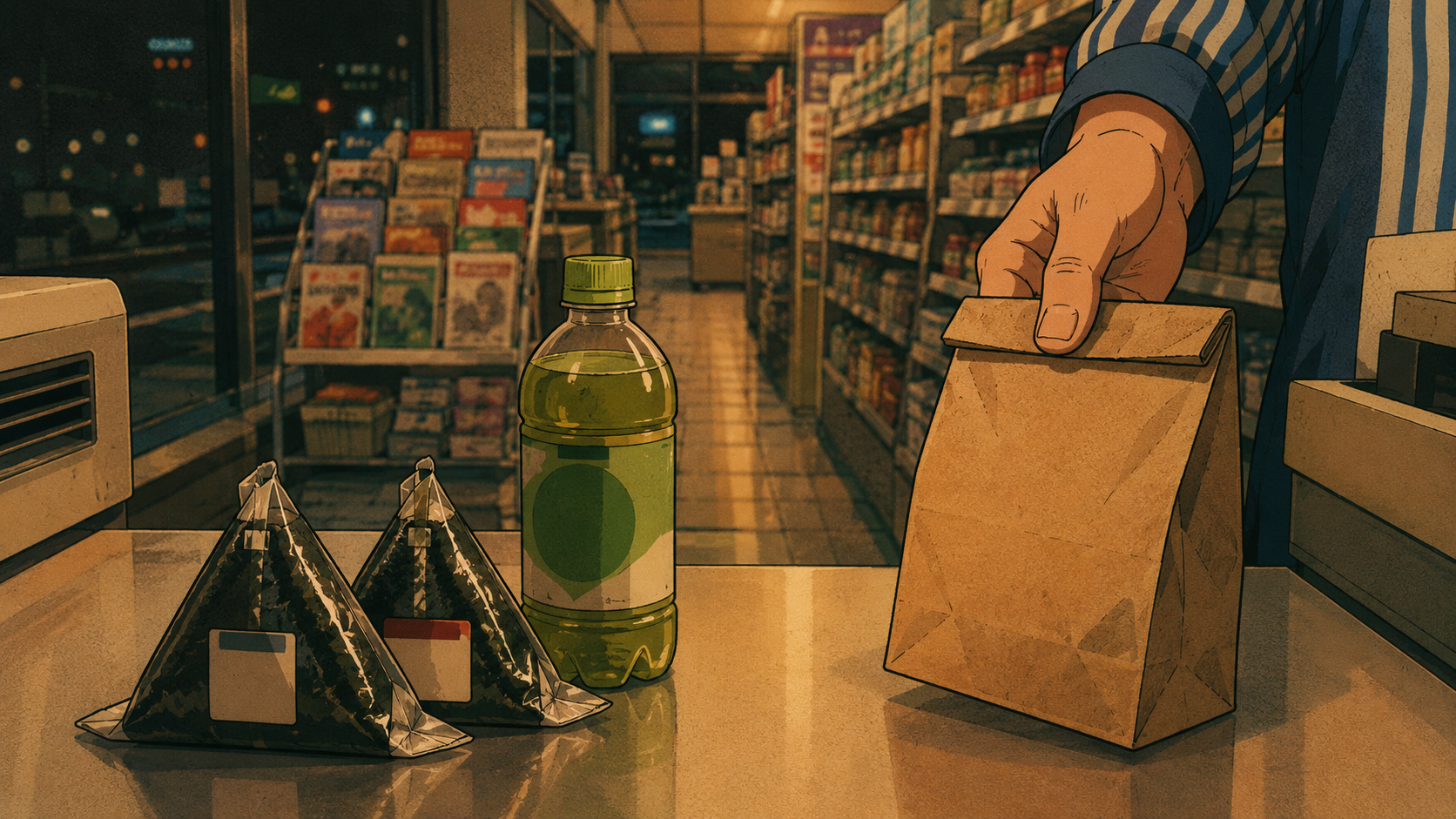
We were standing at a Lawson holding two onigiri and a bottle of green tea when the cashier asked 袋は何枚ですか? We froze. We knew 何枚 meant “how many flat things.” We just couldn't remember which counter to answer with for “one bag.” We mumbled ひとつ…, the cashier nodded politely, and we walked out feeling like we'd lost a fight a Japanese five-year-old wins every day.
If you've ever lived that exact moment — keep reading.
You've been told there are 500 Japanese counters. The number is true. It's also the wrong thing to study. Native speakers use about twelve in daily life, and they default to つ or 個 when they hit something unfamiliar. The system isn't a memorization problem. It's a decision tree with one sound-change rule sitting on top.
The Real Rule: Three Gates and a Fallback
Here's the thing most counter guides get wrong: they hand you a list of 350 and call it a starter pack.
Lists don't help at the conbini. A list trains recall in isolation. And isolation isn't where counters happen. Counters happen mid-sentence, mid-transaction, mid-panic.
What you need is a decision. One you can run in about a second.
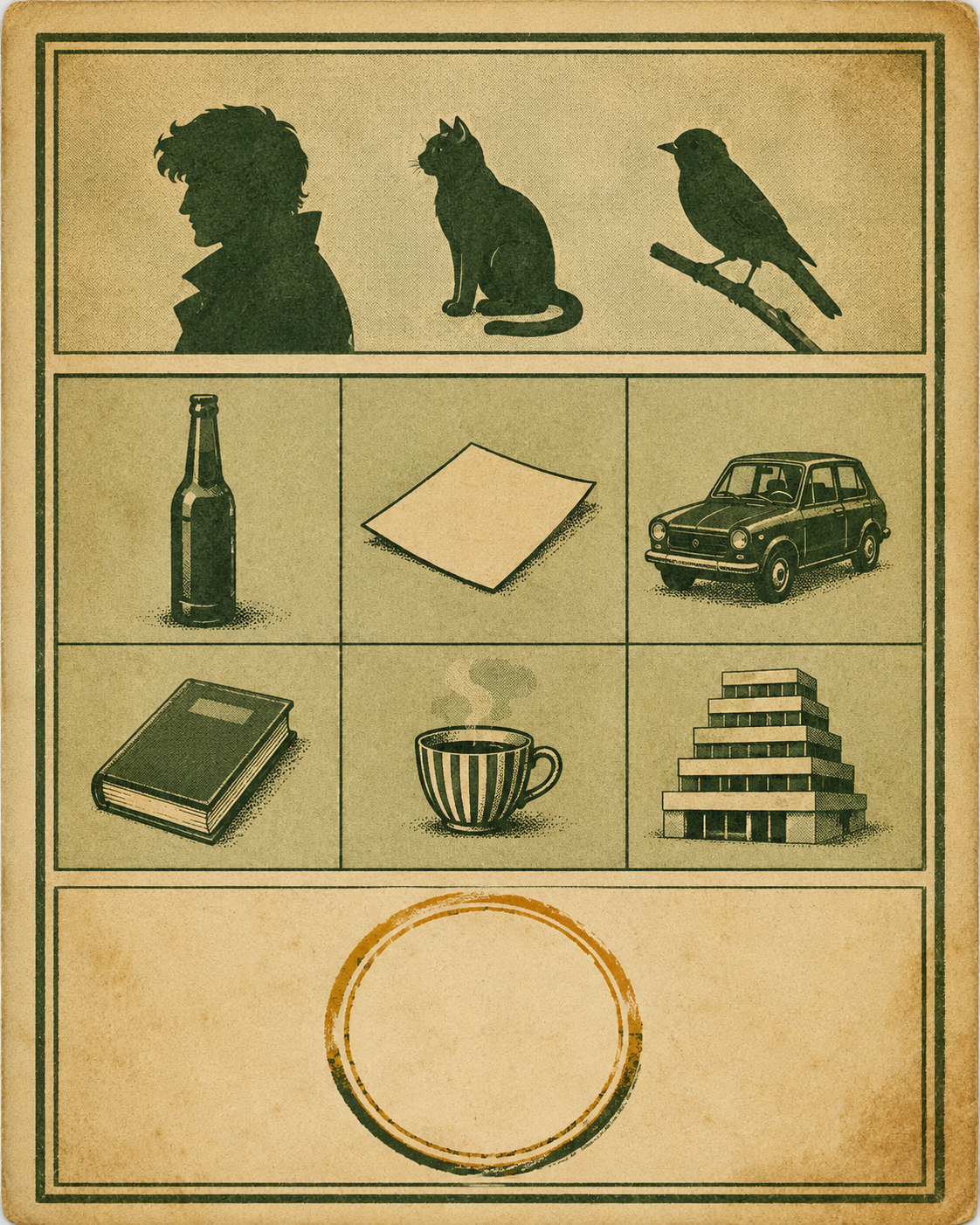
The decision, in one breath: person, animal, or thing? If person — 人. If animal — match the size. If thing — match the shape. If unsure — つ or 個.
That's the whole system. Not the whole vocabulary — the whole system. Twelve counters cover the bulk of daily conversation. Two of them (つ and 個) cover the gaps. And when a native speaker hits a counter they don't know (yes, that happens constantly, even to them), they fall back to 個 the same way you would.
You're not failing when you reach for つ. You're using the rule that was always there.
Two Sound Costumes for the Same Number
Same number. Two counters. Two different readings.
ビール三本
three beers
鳥三羽
three birds
The number didn't change. The counter changed, and the counter pulled the reading along with it. 三 in front of 本 voices the ほ to ぼ. 三 in front of 羽 voices the は to ば. Different counter, different sound, same underlying rule — which we'll meet in the Deep Dive.
The takeaway: when you read さんぼん out loud and it feels weird, that's not a typo. That's the sound-change rule doing its job. Once you see the pattern, the “irregularities” stop looking irregular.
The 12 Counters You Actually Need
Here is the canonical twelve. Print this. Screenshot it. Pin it somewhere your phone can find it at 11pm.
Gate 1 — Animacy:
| What you're counting | Counter | Example |
|---|---|---|
| People | 人 | 三人 |
| Small animals (cats, dogs, fish, insects) | 匹 | 二匹の犬 |
| Large animals (cows, horses, elephants) | 頭 | 一頭の馬 |
| Birds (and rabbits, traditionally) | 羽 | 三羽の鳥* |
*さんわ is also accepted and rising in modern colloquial use. さんば is the standard literary form. Either lands — pick one and stay consistent.
Gate 2 — Shape (for things):
| Shape | Counter | Example |
|---|---|---|
| Long, thin (bottles, pencils, umbrellas) | 本 | ビール三本 |
| Flat, thin (paper, plates, shirts) | 枚 | 紙二枚 |
| Machines, vehicles | 台 | 車一台 |
| Bound objects (books, magazines) | 冊 | 本三冊 |
| Cups/bowls of liquid | 杯 | コーヒー二杯 |
| Floors of a building | 階 | 三階 |
Gate 3 — Fallback:
→ For 1–10 of any unfamiliar inanimate object → 〜つ. ひとつ / ふたつ / みっつ / よっつ / いつつ / むっつ / ななつ / やっつ / ここのつ / とお.
→ After 10, つ stops working. Switch to 個. じゅういっこ, not じゅういちつ.
→ 個 works for any number, any small inanimate object. It's the universal escape hatch.
〜つ isn't lazy. Tofugu calls 〜つ and 個 the “magic counters.” Native pedagogical sources confirm it. We're not handing you a workaround; we're handing you what native speakers already do when they hit a counter they don't use often.
The One Sound-Change Rule. This is the part that compresses ten irregular tables into one pattern.
Before 1, 6, 8, 10 — small っ before the counter. For h-row counters (本, 匹, 杯), the small っ also pulls an extra shift: ほ → ぽ, ひ → ぴ, は → ぱ. For k-row counters (階, 回, 個), the small っ just doubles the k. No additional shift.
Before 3 — h-row counters voice. ほ → ぼ, ひ → び, は → ば. (k-row counters do their own thing — see the Abunai below.)
Before 4 — leave it alone. よん + base form. No gemination, no voicing.
| # | 本 (h) | 匹 (h) | 杯 (h) | 階 (k) |
|---|---|---|---|---|
| 1 | いっぽん | いっぴき | いっぱい | いっかい |
| 3 | さんぼん | さんびき | さんばい | さんがい* |
| 4 | よんほん | よんひき | よんはい | よんかい |
| 6 | ろっぽん | ろっぴき | ろっぱい | ろっかい |
| 8 | はっぽん | はっぴき | はっぱい | はっかい |
| 10 | じゅっぽん | じゅっぴき | じゅっぱい | じゅっかい |
One sentence to hold the whole table: “Before 1, 6, 8, 10 — small-っ and (for h-row) pop. Before 3 — h-row voices. Before 4 — leave it alone.”
This covers the patterns you'll meet most often. Not every counter — roughly 70–80%. 分, 年, 月, 人 all have their own quirks. Don't drag them into this table. Let them be exceptions, and the core rule stays clean.
三階 = さんがい, not さんかい. 階 is a k-row counter that goes its own way on 3: it voices to g (rendaku) instead of staying base. The NHK Handbook and 広辞苑 list さんがい as the standard. Don't conflate it with 三回 — “three times.” Same number-reading, different counter, different gate. And: ❌ よっぽん is wrong. ✅ よんほん is right. The four-keeps-base rule is the place every learner's brain over-applies gemination. Catch yourself there.
This is the same mistake we named back in our SRS triage issue — treating a card-cluster problem as a card-by-card problem. Don't make 50 Anki cards for 一本/三本/六本/八本/十本/一匹/三匹/六匹/八匹/十匹. Make one card for the rule, plus a small set of exception cards for 階, 人, 年, 月.
☕ From the brewing bar — Jitsuryoku: Kihon (free Anki deck)
If counters feel overwhelming because your underlying vocabulary still has gaps, fix that floor first. Our free starter deck Jitsuryoku: Kihon covers the high-frequency words native speakers actually count — drinks, books, papers, machines, people. Build the vocabulary layer there, then run the decision tree on top.
Enjoying this? If someone forwarded you this issue, subscribe here so you don't miss next week's.
SubscribeLevel Up レベルアップ
⬆️ Register, history, and counters that hide in fiction
Three layers most intermediate guides skip.
Keigo / service counters: directional, not bidirectional. In service contexts, the staff side swaps 人 for 名: 何名様でしょうか? The customer answers with 人 — 二人です — not 名. It's a one-way swap. Staff up-shifts to 名 when speaking to you; you don't down-shift to 名 in casual speech. Same pattern as ご注文 or お飲み物: register flows in one direction.
The wago/kango fossil on days of the month. 一日 has two readings, and they are not synonyms. ついたち = the 1st of the month (a wago survival from before Sino-Japanese readings dominated). いちにち = “one day” as a duration. Days 2–10 use wago forms — 二日, 三日, 四日 — and 二十日 keeps a frozen wago form even though everything around it has switched to kango. This is the layered history of Japanese counting showing through: native Old Japanese underneath, Middle Chinese on top, both still active.
Counters that hide in fiction. 柱 for deities (神様三柱 — three gods), 振 for swords (刀一振 — one sword), 騎 for mounted warriors, 句 for haiku verses, 首 for poems. You won't meet these at the conbini. You will meet them in Murakami's 海辺のカフカ, in Sekiro, in any historical drama. Recognition-only — don't drill them.
Kanji of the Week
☕ Kanji of the Week
On'yomi: コ
Kun'yomi: rare in modern use
Meaning: an individual unit; one of something countable.
Key words: 個人 (an individual), 個性 (individuality), 個別 (case-by-case), 何個 (how many?), 一個 (one)
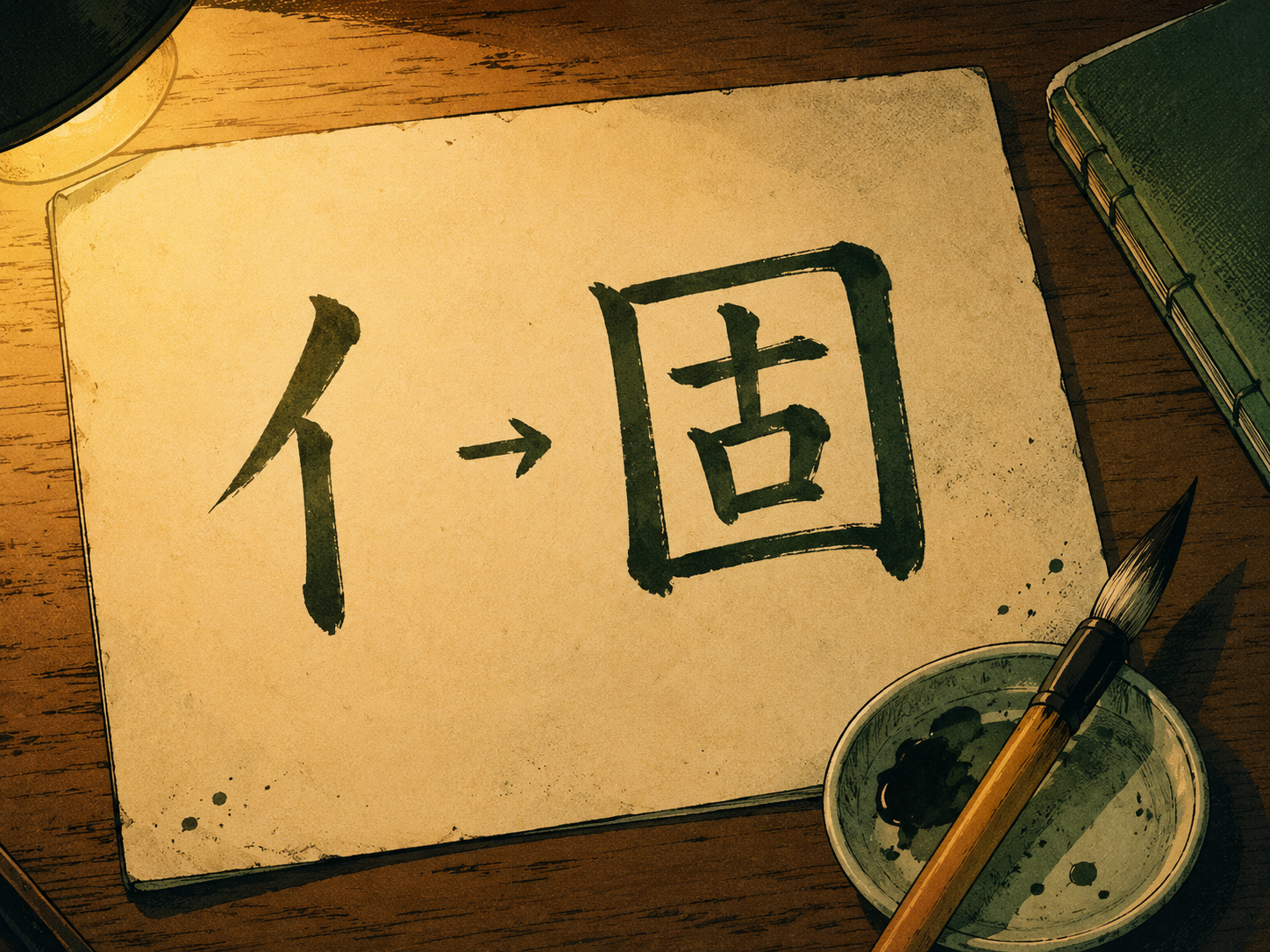
Radical: 人偏 — the “person” radical on the left — combined with 固 on the right (which itself means “hard” or “firm,” and carries the on-reading コ that 個 inherits).
Memory hint: a person (亻) standing next to something firm and discrete (固). 個 is what you use when the thing you're counting is its own little unit: solid, separable, one of many. The same reason 個人 means “an individual”: one firm, separable person inside a crowd.
This week's connection: 個 is the universal fallback counter. When the decision tree breaks, 個 catches you. Twelve counters in active rotation, and 個 is the one you can drop into almost any sentence with a small inanimate object and not be wrong. It's the safety net underneath the whole system.
New to kanji readings? Learn how onyomi and kunyomi work →
Renshuu 練習 📝
This week's task: the Counter Inventory Walk. Total time, 15–20 minutes.
(Answers drop in next week's brew — try the walk first!)
Stand up. Walk through one room of your home — kitchen, living room, bedroom, whichever. For each of the first 15 objects you notice, run the decision tree out loud or in a notes app:
1. Animate or inanimate? If animate, small or big?
2. If inanimate — what's its shape? Long-thin? Flat-thin? Machine? Bound? Cup of liquid?
3. What counter? Write “one of it” with the right reading: 一冊, 一台, 一枚, etc.
4. If you can't decide — write 〜つ or 〜個 and keep moving. That's a correct answer, not a failure.
Starter: First 5 objects only. Decision tree, counter, reading. That's it.
Standard: All 15 objects. For each one, write the counter and one-word reasoning (“shape,” “fallback,” “animate-small”).
Challenge: All 15, plus three full Japanese sentences using three different counters from your walk — including at least one number where the sound-change rule fires (1, 3, 6, 8, or 10).
You'll know you did it when: you can articulate why you picked each counter — gate 1, gate 2, or fallback — without looking it up. The reasoning matters more than the counter.
Even if half your 15 objects ended in 〜つ or 〜個, that's still progress. You noticed the gap in real time, which is the recognition skill we're building. And the fallback is what native speakers do, too. Use it without apology.
If you want to drill counter recognition with real input on top of the walk, mine three counter-rich sentences from a podcast or manga panel and run them through our 3-Question Sentence Mining Filter →.
Last week's answers (the Casual Speech Contraction Gap):
The drill was self-diagnostic — no single key — but the patterns most readers reported expanding were 〜てる (← 〜ている), 〜ちゃった (← 〜てしまった), and 〜なきゃ (← 〜なければ). If those three clicked, you've covered the most common 60% of casual reductions. If a fourth pattern surprised you, reply and tell us which — we're tracking them for a future reference card.
Tiny Win
If you've been ordering ビール二つ for years because you couldn't remember it should be 二杯 — you're in good company. Even native speakers occasionally fall back to 〜つ for unfamiliar objects. The fallback isn't a failure mode. It is the rule. You haven't been “doing it wrong.” You've been doing what the system was built to allow.
Further Reading (optional)
For: readers who want to go past the twelve counters and meet the next thirty.
Use: Tofugu's “Japanese Counters Grouped by How Useful They Are” ranks counters by frequency — start at “must-know” and stop reading when your brain gets tired. Don't try to memorize the whole 350; treat it as a reference, not a study plan.
Why it helps: our decision tree gives you the twelve you'll use daily. Tofugu's taxonomy gives you the next twenty for when you start hitting them in real input. Same logic, deeper bench.
This Week
This week, run the Counter Inventory Walk on one room. Reply with one line: which object made you reach for 〜つ instead of the “right” counter? We're collecting the patterns for a future reference card. Your answer feeds it.
これからも一緒に頑張りましょうね〜 💪
Stay connected

🎧 Catch us on the Kotoba Brew podcast — Japan through its language, one word at a time. Listen here →
Follow us: X / Twitter · Reddit
Until next Thursday,
— Kotoba Brew Editorial Desk