

Sentence Mining Done Right
Study Strategy
{{first_name | みんな}}さん、こんにちは ☕
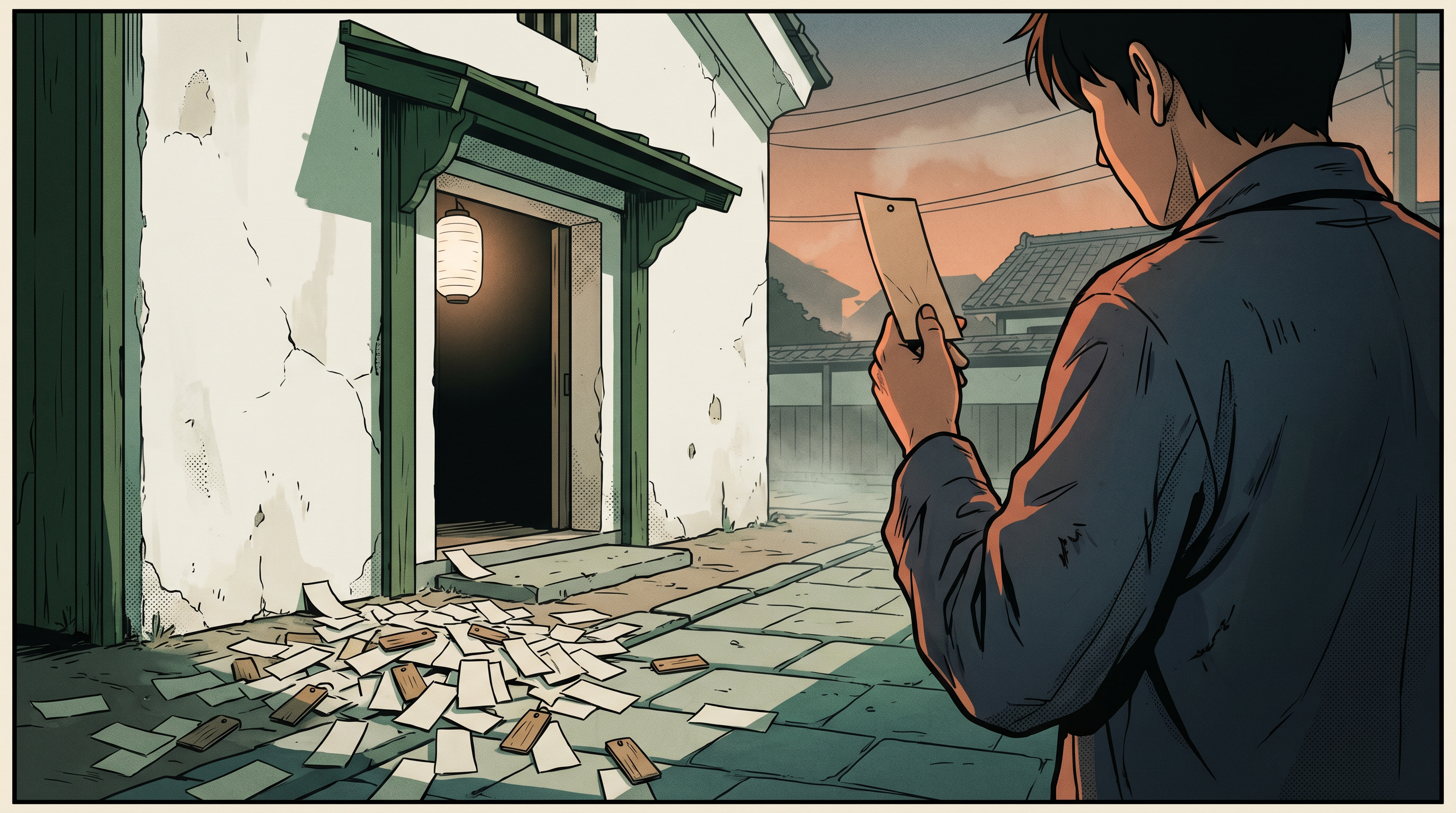
We mined 15 sentences from one anime episode. Felt great. Tomorrow-us hated past-us.
Six weeks later, 12 of those 15 were leeches. Eight fails each, zero sightings in the wild. The hard work was real. The output was noise.
The problem wasn't sentence mining. It was sentence mining without a filter.
Know someone with 3,000 cards and zero progress? Forward this — they need it more than us.
Mine for Gaps, Not Coverage
Most sentence mining advice is fine. The selection criteria is what's broken.
Here's the mistake almost every immersion guide tiptoes around: they teach you the shape of a good mining sentence, not whether a particular sentence is worth your time.
The immersion community's "one unknown word per sentence" rule is a useful simplification of Krashen's i+1 — but it's a format check, not a selection check. Every page of native content has thirty sentences that pass the format check. Mining all thirty is what wrecks your deck.
So here's the reframe we want you to carry into your next session.
Coverage-mining: "I don't know this word. I'll mine it."
Gap-mining: "I keep fumbling this pattern in real use. I'll mine the sentence that fixes it."
One adds cards. The other fixes leaks.
Last week's edition is a perfect example. If ている confusion has been quietly tripping you up — you read 死んでいる as "is dying," you hesitate before 結婚している — that's the gap. Mining a sentence that nails the exact pattern you keep getting wrong is gap-mining at its purest. You noticed the leak. You found the fix. The card almost can't fail.
Mining 適当 because it showed up in an anime and you didn't know it? Coverage. The card joins the pile. Six weeks later it's a leech.
The difference isn't the sentence. It's the decision in front of it.
We've been there. We've sat in front of Yomichan at 11 PM telling ourselves "well, I didn't know it, so it counts." It doesn't. Not knowing a word is the floor for mining, not the ceiling.
Same Manga Page. Two Decisions.
Both sentences below are valid i+1. Both pulled from the same chapter. Only one becomes a card.
SENTENCE A
最近、ちゃんと寝られていない。
"I haven't been sleeping properly lately."
SENTENCE B
彼の眼差しに射すくめられた。
"I was transfixed by his gaze."
The difference: A targets a pattern you'll use this week — られる + ていない for a state you keep meaning to express. B is a beautifully literary collocation you might meet again in three months. A is a gap. B is coverage. Mine A. Skip B (or, fine, screenshot it).
A becomes fluent. B becomes a leech with poetry.
If your deck has 3,000 cards, you don't have a vocabulary problem. You have a selection problem.
The 3-Question Filter
Quick gut-check: think of the last 10 cards you added. How many were "I keep failing this in real life" — and how many were "I didn't know it, so I grabbed it"?
That ratio is your filter, with or without one. Here's the deliberate version.
1. Gap — last 2 weeks?
If you haven't cursed this exact pattern in the last 10 days, it's not a gap.
2. Sentence clear — 1 lookup max?
If the card needs a paragraph of explanation, it's a trap.
3. Will I see it again — this month?
If it only exists in light novels and you only watch YouTube, it's cosplay.
1. Gap. Have we noticed this word or pattern failing us in real use — reading, listening, or speaking? Not in the abstract. In the last two weeks. If we haven't bumped into a need for it outside this mining session, the answer is no.
2. Sentence quality. After the lookup, does the whole sentence make sense? Does the surrounding context — the scene, the audio, the panel — reinforce the meaning? If the sentence requires two lookups, or we can't reconstruct why it means what it means, the card will fail. Find a better example or skip the word entirely.
3. Frequency. Will we realistically encounter this in the next month of normal immersion? If it's a literary-only word and we mostly read manga, or a keigo form and we mostly watch anime, the ROI is near zero.
If any answer is no — skip. The card costs nothing to skip. Skipping is the move.
"But if I only mine gaps I've noticed, I'll miss words I don't know I don't know." (Also: "But it feels productive!") We hear both every time. The 80/20 of language acquisition runs in the opposite direction: the gaps you notice are almost always more important than the ones you don't. Frequency handles unnoticed gaps for free, through repeated exposure. Your conscious mining attention is too expensive to spend on coverage.
Mining is not studying. It's adding debt.
The Session Budget
Before the math: which Future You wrote tomorrow's review queue? Past You did. Yesterday. With every card you waved through.
Cap mining at 5–10 new cards per session. Hard cap. Even if you find fifteen valid candidates.
This isn't willpower. It's math. We covered the multiplier in our SRS Triage edition: at steady state, daily reviews land around 10x your daily new cards.
Mining 10/day = ~100 reviews tomorrow. Mining 20/day = ~200. The bottleneck is never your mining hour. It's tomorrow's review queue.
20 new cards today is you scheduling a 40-minute punishment for Future You.
Most "mine until you stop having fun" advice fails because the fun runs out three weeks later, when reviews catch up. By then you've already locked in the load. Set the cap before you open the content, not after.
Capping the input is half the discipline. The other half is knowing when to stop entirely.
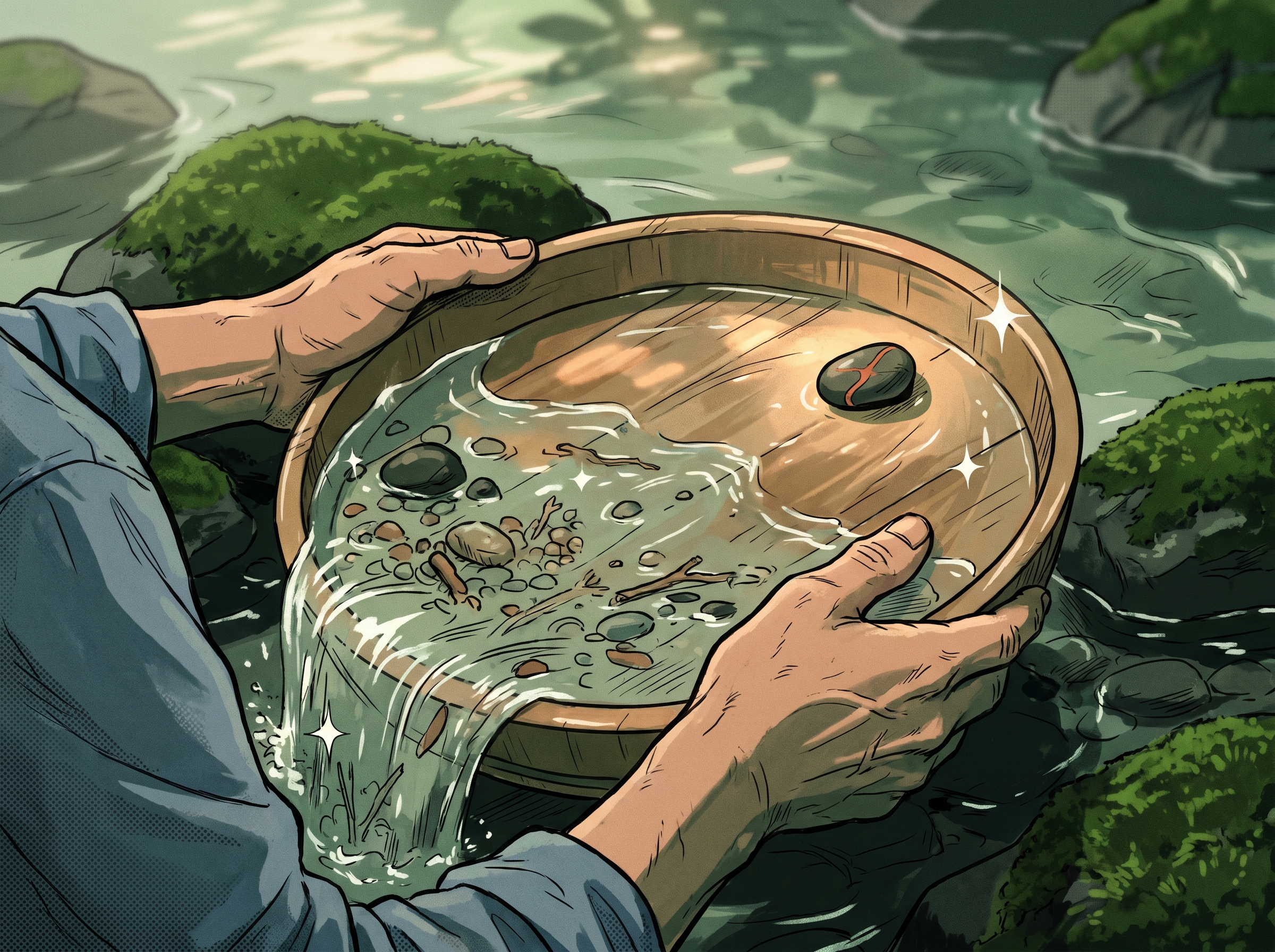
That's the input side. Now the off-ramp.
Every "maybe" card becomes tomorrow's punishment.
The Diminishing Returns Signal
If you can read 80% without pausing and you're still mining 10/day, you're not learning Japanese — you're maintaining a database.
When comprehension lands around 80% without pausing, mining's job is mostly done. Shift weight toward pure immersion. Let frequency carry the rest.
This is the part most guides skip — when to stop. There's no "graduation."
There's a slow handoff: 95% mining / 5% reading at the start, drifting to 5% mining / 95% reading at the end.
And one more trap before we move on.
The Genre Lock-In Trap
Quick gut-check: which genre are you accidentally training for right now? If every card you've made for the last three months came from one anime, you know twelve words for sword techniques and zero words for "the shipment was delayed."
Genre lock-in feels like a plateau. It's actually a coverage hole.
Rotate sources. Manga and a podcast. Novels and a news article. Not because variety is virtuous — because monoculture decks build blind spots that masquerade as ceilings.
☕ Enjoying this? If someone forwarded you this issue, subscribe here so you don't miss next week's.
SubscribeLevel up レベルアップ: Register Mining and Collocations
⬆️ Level up
Once the filter feels automatic, your mining game changes shape. Welcome to the next league.
The words you're mining aren't unknown anymore. They're known words behaving in ways you wouldn't have produced.
Register mining. Mine pairs that show genuine lexical-level register shifts, not just politeness markers swapped around a neutral verb. The cleanest contrast: 思う / 存じる (humble) / お思いになる (honorific). Or 言う / 申す / おっしゃる. Same idea, three different verbs. That's the gap at this level: the moment you realize a Japanese executive used 存じる because the sentence demanded it, and your ear has to learn the difference.
Collocation mining. 薬を飲む — not 食べる. 傘を差す — not 使う. These are invisible until a native speaker uses them and suddenly they're everywhere. Card front: full sentence with the collocation highlighted. Card back: the "wrong" version we'd have produced, plus why the native pairing is the natural one.
The monolingual bridge. When J–J definitions feel faster than switching to English, your mining cards can go monolingual. We'd start with 明鏡国語辞典, strong on usage notes and modern vocabulary, then add 旺文社国語辞典 once the J–J habit sticks. This is the endgame of sentence mining — and the bridge to native-level reading.
Kanji of the Week: 掘
☕ Kanji of the Week
On'yomi: クツ
Kun'yomi: ほ(る)
Meaning: to dig, to excavate
Key words:
掘る — to dig
発掘 — excavation, unearthing
掘り出し物 — a find, a bargain, literally "something dug out"
Radical: 扌 (hand) plus 屈, primarily a phonetic component, with a faint semantic echo: 屈 means "to bend / to crouch," the posture you take when you dig.
Memory hint: Sentence mining is digging. The hand component is doing the work. The 屈 is the way your back bends when you stop and pick something up. A 掘り出し物 is the perfect mined card: something you pulled out of native content that was genuinely worth pulling.
This week's connection: Not every hole yields treasure. The 3-Question Filter is what tells you where to dig — and where to keep walking.
New to kanji readings? Learn how onyomi and kunyomi work →
Renshuu Time 練習 📝
This week: a Mining Audit + a 5-Card Session. 15–20 minutes total.
(No answer key on this one — the answers are in your own deck. Reply and tell us your audit ratio if you want us to react in next week's brew.)
Starter: Open your SRS system (Anki, JPDB, Kitsun — whatever you use). Pull up the last 10 sentence cards you created. For each one, run the 3-Question Filter retroactively: Gap? Good sentence? Frequency? Count how many would pass all three today.
Standard: Do the audit on 20 cards. Then run a fresh 5-card mining session on whatever native content you're already consuming. Stop at 5 even if you find ten valid candidates. Especially if you find ten.
Challenge: Audit + 5-card session + write one sentence per card explaining which of the three questions made you keep it. The writing is what locks the filter into instinct.
You'll know you did it when: You created exactly five cards (or fewer) and can name the gap each one fills. You also identified at least one sentence you would have mined a month ago and chose to skip today.
If you audited even five old cards and realized two were noise — that's signal. You just saved yourself dozens of future review hours by learning to spot the difference. Diagnosis before prescription.
That audit ratio — cards kept versus candidates — is the single most useful number in your study notebook this month. Track it. Watch it shrink.
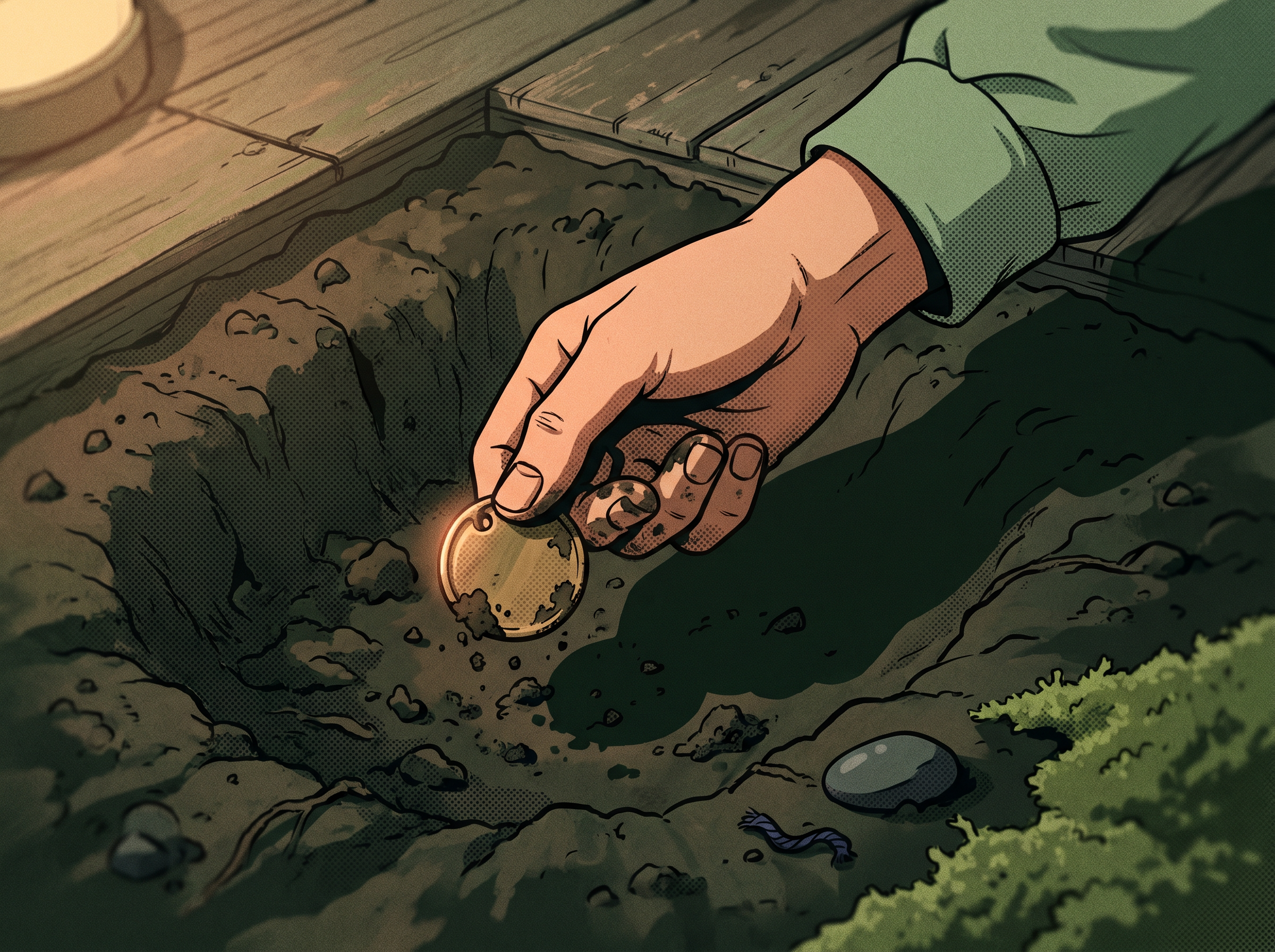
If you read this far, you already know more about what to mine than most learners with three thousand cards. The frameworks tell you how to make a card. The filter tells you whether the card should exist at all. That's the whole shift.
Further Reading
For: Anyone whose mining setup needs a tune-up alongside the filter.
Use: Read Refold's Sentence Mining roadmap for the full mechanics — synchronous vs. asynchronous, card formats, the 1T rule. For the tooling layer (Yomitan + mpv + subs2srs), Tatsumoto's immersion toolset is the canonical reference.
Why it helps: We gave you the filter. Refold gives you the setup. The combination — what to mine plus how to mine — is the full picture.
This week, run the 3-Question Filter on your next mining session. Before every card: Gap? Good sentence? Frequency? Reply and tell us how many cards survived the filter — out of how many candidates. We read every reply.
If you're the kind of learner who actually finishes decks, send this to the friend drowning in leeches.
Stay connected
🎧 Catch us on the Kotoba Brew podcast — Japan through its language, one word at a time. Episode 001 (The Eel Sentence) is the natural follow-up: a single sentence, recorded out loud, as a different way to dig. Listen here →
Follow us: X / Twitter · Reddit
これからも一緒に頑張りましょうね〜 💪
— Kotoba Brew Editorial Desk
P.S. — Last week's Verb Sort Challenge: 走る, 読む, 泳ぐ, 書く, 歌う are process verbs — ている means the action is happening right now. 結婚する, 落ちる, 届く, 壊れる, 始まる are point verbs — ている means the change already happened and the state remains. The pattern: if the action has duration, ている is progressive. If it's instantaneous, ている is resultative. If you got the process verbs right but stumbled on point verbs, you're in the most common bucket — and exactly the one the framework is built to fix.