第037号 · Issue 037
Fiction's わし Is a Costume. 広島's Is Not.
{{first_name | みんな}}さん、こんにちは ☕
広島, a Tuesday afternoon. A sixteen-year-old glances out the window and says 「雨じゃ」.
Not a wizard. Not a professor. Not a bit. 👀
In a survey of the city, that 〜じゃ beat every alternative in every age group, teenagers included. So before we explain why fiction's grandfathers all talk this way, we have to fix the thing nearly every anime-Japanese explainer gets wrong.
Know someone who learned a little too much of their Japanese from subtitles? Send them this. Share this issue →
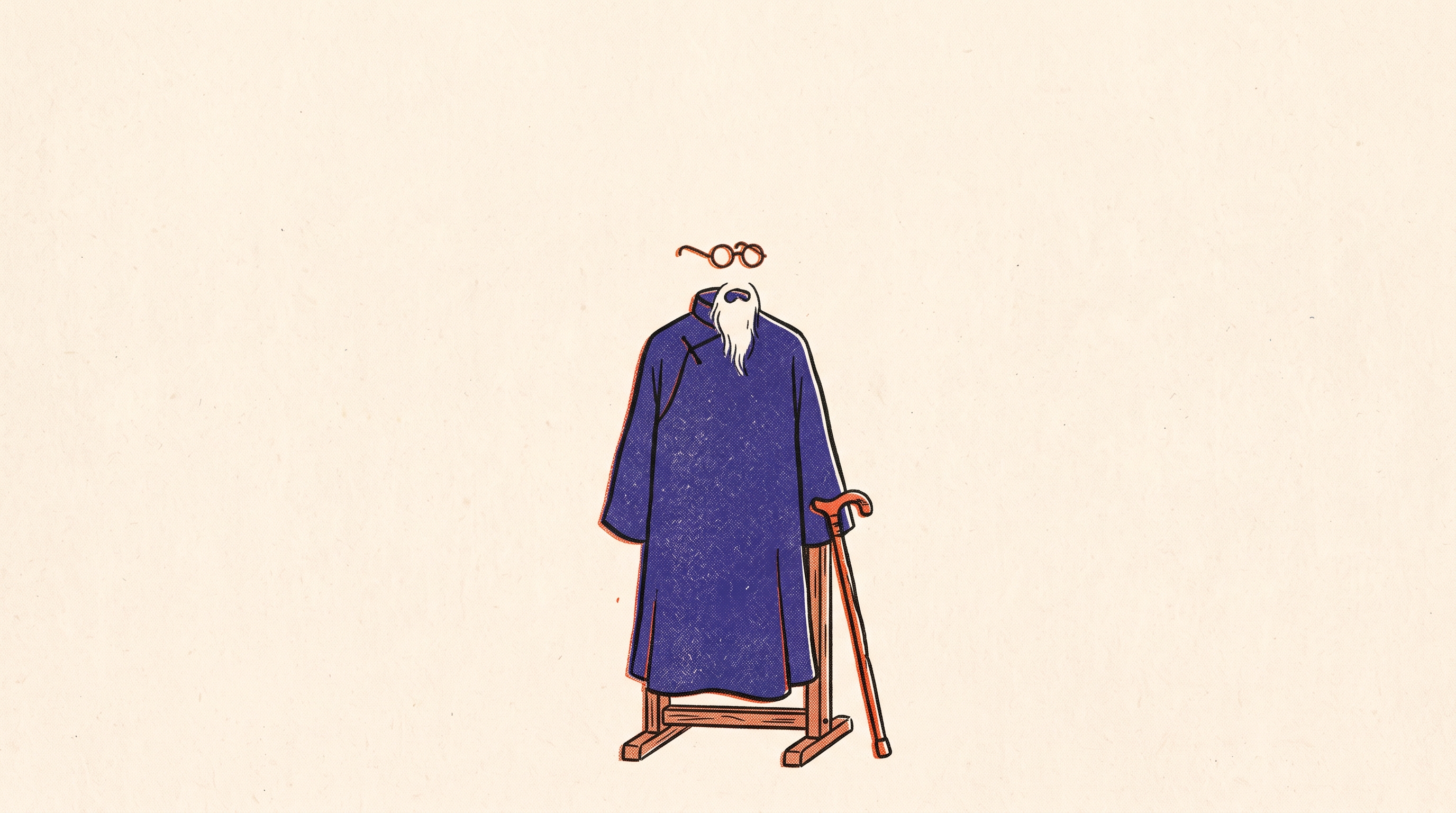
The artifact is a publisher's own sales copy
Iwanami Shoten's catalogue page for 金水敏's book on 役割語opens with a joke you are already in on. Twelve characters:
「そうじゃ、わしが博士じゃ」
You know exactly who is talking. You can hear the voice. And across a year in Tokyo you will not meet him once. 💡
So: why does every professor, wizard and grandfather in Japanese fiction speak this way, when almost nobody around you does?
One copula, doing all the work
Strip it back and there is less going on than it sounds like.
〜じゃ is a copula. It sits exactly where だ sits. Nothing more.
→ Standard: 私は知っている。
→ Fiction's old man: わしは知っておるのじゃ。
Same proposition, three swaps: だ becomes じゃ, いる becomes おる, わたし becomes わし. That is the entire costume. 🎯
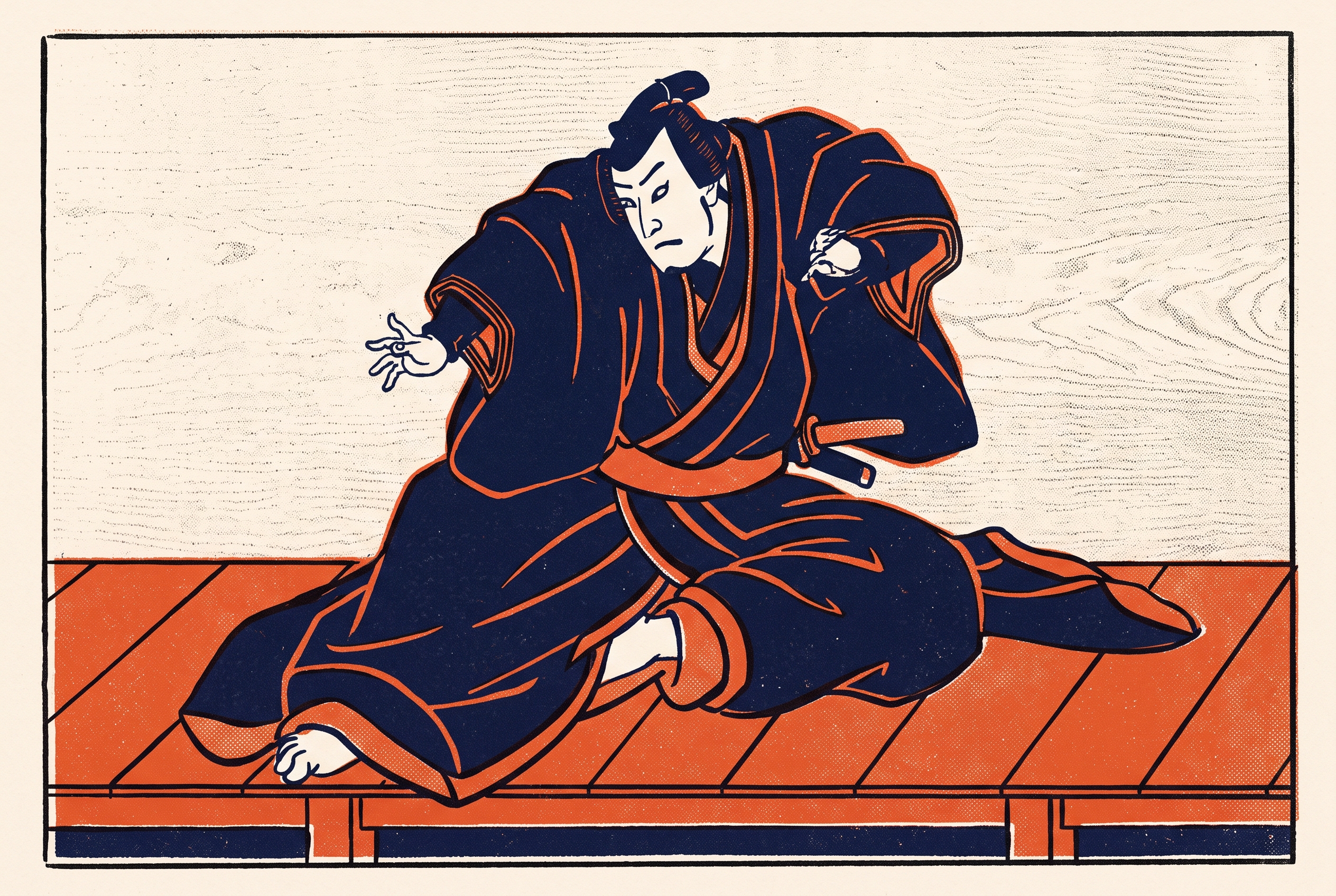
Kinsui traced it backwards through the print record and landed in the late Edo period. As 江戸speech consolidated, older speakers and the professional classes, doctors and scholars, held onto 上方forms while younger Edo speakers moved on. Kabuki and popular fiction grabbed that live generational contrast and used it to label characters fast. Once labelled, it stopped tracking anybody's real speech and became a uniform.
一 言 | ☝️ Chotto ちょっと This is why 役割語 is efficient rather than lazy. Two morphemes tell you a character's age, their authority and roughly their function in the plot, before they have said anything of substance. It is closer to a costume department than to bad writing. Other registers work the same way: お嬢様ことば with its 「〜ですわ」, or the vague countryside speech that belongs to no actual region. |
危 険 | ⚠️ Abunai 危ない Here is the part the explainers get wrong. 〜じゃ is not extinct and never was. |
In 広島 and 岡山it is ordinary, current, everyday grammar. A dialectologist's survey of 広島市 found じゃ the top answer in every age band for 「雨じゃ」 and 「雨じゃろう」, high schoolers included. Push it into the past tense and the picture flips: the teenagers said 「雨だった」 two thirds of the time. Even a living form is living unevenly. 📊 At a university in 岡山, nearly eighty percent of students said they use 寒いじゃろ, double the number using the older form. That is a form spreading among young speakers, not a relic.
Be precise about where: the 山陽side of 中国地方, 広島 and 岡山 especially. The 山陰side mostly uses だ, and 近畿has moved to や. This is a real regional pattern, not a vague "western Japan". It is a zone rather than a line, though: the north of both prefectures leans だ, western 山口is drifting to や, and 播州over in 兵庫kept じゃ. The middle is always messier than the map. 🗾
For わし the honest answer is narrower. It is still in use around the 瀬戸内, conditioned by age, by gender and by who is listening, and we could not point you to a recent large survey.
So what do you do with it? Recognise it. Never wear it.
A learner who adopts わし is doing one of two things, and neither is fluency. Either quoting a cartoon at somebody who did not ask, or claiming a regional identity that is not theirs, in front of people for whom it is not a costume. 😅
This happens more than you would think. Osaka University tells the story of a teacher greeted by a NARUTO-loving student with 「先生、ちょっと待っておれ」. They had no idea they were in costume.
Kinsui includes the uncomfortable half himself: 役割語 only works because there is an unmarked standard at the centre, a written plain style nobody actually speaks, against which every other variety reads as a character trait rather than as a person. 📚
This Issue's Japanese
Word
役割Neutral, everyday
Means: role, part, the job something does. Exactly the 役割 in 役割語. 📌
Use it: 役割を果たす, to fulfil a role. 役割分担, division of duties. Ordinary in work talk, writing and conversation alike. ⚡
Kanji 漢字
Meaning: to divide, to split, a proportion.
Reading to learn first: わり, the one in 役割.
Also reads: カツ in 分割· わ(る)in 割る
Common words: 割引discount · 割合ratio · 役割 role
Memory hint: grade six, so Japanese children have it by twelve, and you will meet it on every sale sign in the country. 🍵
This issue's connection: 役割語 is literally 役割 plus 語. A character is handed a role, and the language is the costume that announces it. 👀
Renshuu Time 練習📝
Ten minutes. The labelling is the exercise, and the transformation is just the excuse.
Take 私は知っている and fill four rows. The last column is the point.
→ Starter. 知っています。Who says it: you, to a colleague or a stranger. Where: work, a shop, a class. Do you say it? Yes. This is your default.
→ Standard. 知ってるよ。Who: you, to a friend. Where: a text, a bar. Yes, once you know them. Then わしは知っておるのじゃ。Who: a fictional professor. Where: Dragon Ball, a folk tale, a period drama. No. Recognise only.
→ Challenge. 知っとるよ。Who: somebody in 広島, right now, genuinely. Also not yours, but not because it is a costume. It is someone's home register. Borrowing it is a question about belonging, not about accuracy. Then do three more with sentences you already own: 明日行く。/ これは高い。/ 疲れた。
You will know you did it when: you can name a specific human being who would say each line, in a specific place. If you cannot, you have written a costume instead of a sentence. Cross it out. 🙌
✨ Yatta やった
You just gained a reading skill that unlocks a lot of the characters in manga, games and subtitles, and you gave up exactly nothing you were ever going to say out loud. 💪
The tiny win
The next time a character ends on 〜じゃ, you will know three things at once: roughly who they are meant to be, where the form actually comes from, and that it is not yours. That is a lot from one syllable.
One reply back
Hit reply with the strangest character voice you have run into. One line is plenty.
We are collecting them, and the best ones are going to end up in an issue. 👀
Stay connected 🙌
We are around during the week if you want to talk shop, share a win, or just lurk. Both are completely fine.
Follow us: X / Twitter · Reddit
これからも一緒に頑張りましょうね〜 🍵
Kotoba Brew Editorial Desk