

The わけ Family
One Root, Four Meanings, Zero Reason to Keep Guessing
{{first_name | みんな}}さん、こんにちは ☕
Two sentences. Seven characters the same up front. Opposite meanings.
彼が知らないわけがない。
彼が知らないわけではない。
If you had to translate both right now, on the spot, without scrolling — could you? Or would you stall for a second, clock the negative sitting in the middle, and just… guess?
We've all been guessing at わけ for a while. Today we stop.
If this one finally makes わけ click for you, it'll click for someone you know. Subscribe or share →
One Word, Not Four
Here's what most resources get wrong about わけ: they hand you four separate grammar points and never tell you they're the same word.
わけだ. わけがない. わけではない. わけにはいかない. Four Anki cards, four example sentences, four English glosses, usually introduced chapters apart. You pass all four cards. Then you hit one in a novel and your brain still goes "…negative? which negative?"
That's not a you problem. That's a filing problem.
Because all four are built on one kanji — 訳 — which means the reason, or the logic, of a situation. When you make sense of why something is the way it is, you've grasped its 訳.
Once you see the root, the four forms stop being four coincidences. They're four moves on one idea:
→ わけだ delivers the reason as a conclusion. "Ah — so that's why."
→ わけがない says there's no reason for it to be true. "No way."
→ わけではない says that reason isn't the whole story. "It's not that…"
→ わけにはいかない says the reason won't let you act. "I can't — not like this."
One root. Four moves. That's the whole trick, and we'll spend the rest of this issue making it stick.
The Pair That Trips Everyone
Back to those two sentences from the top. This is the pair that trips everyone, so we're settling it first.
彼が知らないわけがない。
"There's no way he doesn't know." → He definitely knows.
彼が知らないわけではない。
"It's not that he doesn't know." → He does know — but that's not the whole picture.
The difference: がない wipes out the possibility (his not-knowing is impossible, so he knows). ではない wipes out the completeness (his not-knowing isn't the full story — maybe he knows but pretends, or knows but it's complicated).
Same seven characters. One denies that something could be true. The other denies that something is the whole truth. Different jobs, not different volumes of the same "no."
The Four Forms, One at a Time
Let's walk the four forms one at a time, with the root doing the heavy lifting.
1. わけだ — "so that's the logic" (no negation).
This is the "no wonder" form. You've just worked out why something is the case, and わけだ delivers that realization.
三年も日本に住んでいたのか。道理で日本語がうまいわけだ。
"You lived in Japan for three years? No wonder your Japanese is good."
それで彼は来なかったわけだ。
"So that's why he didn't come."
道理で寒いわけだ。雪が降っているんだから。
"No wonder it's cold — it's snowing."
わけだ isn't just から ("because"). から states a plain reason. わけだ delivers a realized conclusion — the little "ohhh, that explains it" click. And notice how often 道理で ("no wonder") rides along in front of it — that pairing is doing half the "so that's the reason" work, which is exactly the flavor わけだ adds on top of a plain から. That click is the whole point.
2. わけがない — "no way, impossible" (total negation).
There's zero logical room for it. Close to はずがない, and usually said with some feeling behind it.
あんな真面目な人が嘘をつくわけがない。
"There's no way someone that serious would lie."
一晩で N2 の文法が全部身につくわけがない。
"There's no way you master all the N2 grammar in one night."
こんなに毎日練習しているんだから、上達しないわけがない。
"You practice this much every day — there's no way you don't improve."
In casual speech this shrinks to わけない — but careful, わけない on its own can also mean "easy," sorted out by context and intonation. One more reason this family feels slippery.
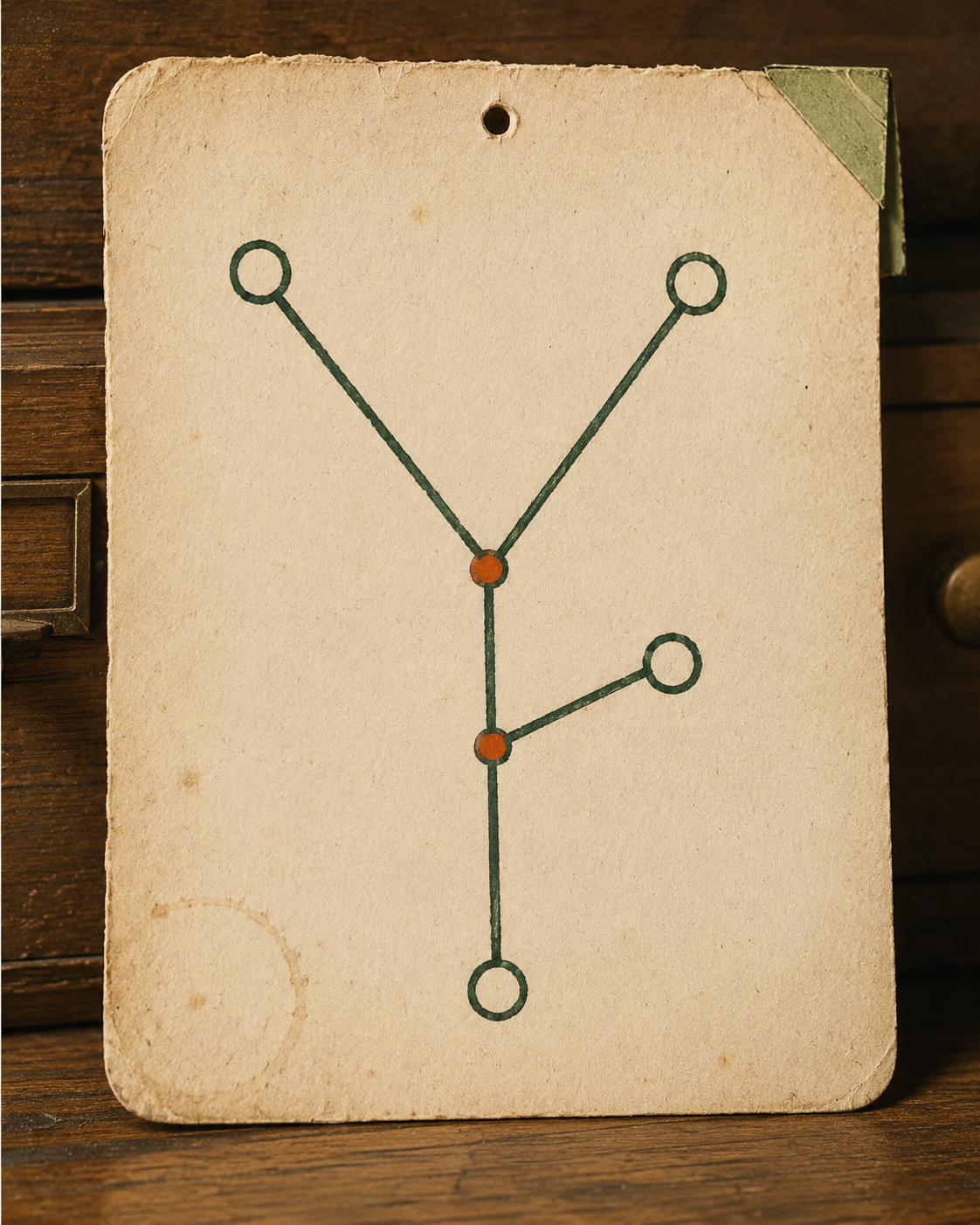
impossible
not-entirely
Q2 side branch: circumstance, not logic?
One root. Two questions. Four moves.
3. わけではない — "it's not (entirely) that" (partial negation).
You're softening, correcting an over-reading, adding nuance. Not denying flat-out. It loves a けど or が trailing after it.
日本語の勉強が嫌いなわけではないけど、最近は忙しくてできない。
"It's not that I dislike studying Japanese — I've just been too busy lately."
高いわけではない。普通だ。
"It's not that it's expensive. It's normal."
全然分からないわけではないが、自信はない。
"It's not that I don't get it at all — but I'm not confident."
Notice the move: わけではない never fully closes the door. It says this isn't the whole story, and then usually tells you the rest of the story.
4. わけにはいかない — "I can't — not like this" (circumstance, not logic).
This one isn't about possibility at all. It's about social, moral, or practical pressure. You could, but you mustn't.
明日は大事な会議があるから、今日は飲みに行くわけにはいかない。
"I've got an important meeting tomorrow, so I can't go out drinking today."
みんなが頑張っているのに、自分だけ休むわけにはいかない。
"Everyone's working hard — there's no way I can be the only one slacking off."
わけにはいかない is not "I can't swim" or "I can't read that kanji." It is never for physical or ability-based inability.
❌ 泳げないから海に入るわけにはいかない。
✅ 泳げないから海に入ることができない。(or 入れない)
Physical can't = ことができない / 〜れない. わけにはいかない = "I'm able to, but circumstances say no." Mix these up and a native reader will feel the wire cross instantly.
(This is one of the forms people mix up most — if a piece of this just clicked into place, tell us in a reply.)
The two-question tree (screenshot this):
→ Q1 — Any negation? No → わけだ (conclusion / "no wonder").
→ Q2 — If yes, total or partial? Total, it's impossible → わけがない. Partial, "not the whole story" → わけではない.
→ Side branch — Is the "can't" about circumstances, not logic? → わけにはいかない.
Two questions. 90% of your わけ choices pick themselves.
Enjoying this? If someone forwarded you this issue, subscribe here so you don't miss next week's.
Subscribe⬆️ Level up レベルアップ
Stack a negative inside the form and things get spicy. Three double-negatives, and this is exactly where strong learners slip in fast reading.
ないわけにはいかない = "can't NOT do it" = have to.
お世話になったから、お礼を言わないわけにはいかない。
"They helped me out, so I have to thank them."
ないわけがない = "no way it's not so" = definitely is.
これだけ練習したんだから、勝てないわけがない。
"We practiced this much — there's no way we lose."
ないわけではない = "it's not that I never…" = I do, to a degree.
話せないわけではないが、自信はない。
"It's not that I can't speak — I'm just not confident."
The shapes rhyme. The meanings don't. If you can read those three cold without backtracking, you've beaten the part of わけ that even trips people prepping for the highest levels.
We'll be honest — we got this exact one wrong for longer than we'd like to admit. For a solid stretch we read 話せないわけではない as "there's no way I can speak" (that's わけがない's job) and confidently told ourselves the opposite of what the sentence meant. It took getting it wrong in a real conversation, watching the other person's face not match our sentence, to finally feel the seam between the two. So if these still blur — you're in exactly the right company.
Kanji of the Week: 由 📚
☕ Kanji of the Week
On'yomi: ユ・ユウ・ユイ
Kun'yomi: よし・よる
Meaning: reason, cause, origin — the source something comes from
Key words: 理由 (reason, the "why" behind something) · 自由 (freedom) · 由来 (origin, derivation) · 由緒 (history, provenance, pedigree)
Radical: 田("field")— the whole character is built around it.
Memory hint: Picture a single shoot pushing up out of a 田 (field) — trace it down and you find its root, its source, the 由 it came from. (That's a memory aid, not the real history — 由 started as a pictograph and picked up "reason/cause" later — but the shoot-from-the-field image sticks.)

This week's connection: The whole わけ family runs on 訳 = "the reason of a situation." 由 is reason's close cousin — 理由 is the everyday word for "the reason why." Master わけ this week, and 由 gives you the noun to talk about reasons out loud. And 自由 ("freedom") is the warm bonus: the same "reason/source" kanji, pointing at "acting from your own source."
New to kanji readings?
Learn how on'yomi and kun'yomi work →Renshuu Time 練習 📝
Two moves: sort six sentences by form, then write four of your own. Recognition first, then production — that's the combo that actually installs the difference.
(Answers drop in next week's brew — try sorting them first!)
Starter: Just sort. Read the six sentences below and label each one — わけだ / わけがない / わけではない / わけにはいかない — plus a one-word job (conclusion / impossible / not-entirely / can't-in-conscience).
(a) 道理で寒いわけだ。雪が降っている。
(b) 彼が犯人のわけがない。
(c) 高いわけではない。普通だ。
(d) 締め切りだから、帰るわけにはいかない。
(e) 知らないわけではない。
(f) これだけ勉強したんだから、受からないわけがない。 ← this one's the double-negative trap. Read it twice.
Standard: After sorting, write four of your own — one per form — about your real week. One conclusion (わけだ), one flat impossibility (わけがない), one soft correction (わけではない), one obligation-driven can't (わけにはいかない).
Challenge: Hunt one real わけ in the wild — a novel, an article, a subtitle — screenshot it, and label which form it is and why.
You'll know you did it when: you can label all six without backtracking, and your four own sentences each land on a different form on purpose — not by luck.
Even if you only nailed the わけがない vs わけではない pair and punted on the rest — that's the one everyone flips. You just pulled apart the two forms that look identical. That's the whole ballgame.
⬆️ Level up レベルアップ (optional)
Re-label (f) and any of your own sentences that used a negative stem — is the double-negative doing "have to," "definitely is," or "to a degree"?
Last week's answers (The Post-Test Limbo): The Sunday Reset isn't a quiz — the "answer" is one folded sheet: the identity sentence up top, an honest list of what you actually touched, one thing for next week, and a one-word "did the identity hold?" If you ran it, you've got an anchor that doesn't depend on the score. If Prompt 3 came back "sort-of," that's not failure — that's the signal to tweak the sentence, not to quit.
Tiny Win
If わけがない and わけではない have blurred together for you for months — you're not behind. They're one character apart, taught on different pages, and even native speakers stall on them in the moment. The fuzziness was never you. It was the filing. And you just re-filed the whole family.
Further Reading (Optional)
For: N3–N2 learners who want to see わけだ sitting next to its explanatory cousins (のだ・んです) in one place.
Use: Ten minutes on Wasabi's explanatory grammar article — read the わけだ section, then say each example out loud with the "ah, so that's why" feeling.
Why it helps: it drills the "realized conclusion" flavor of わけだ that separates it from a plain から — the exact click we built the Core Concept around.
Your One Thing This Week
Hit reply with one わけ sentence you caught in the wild — a book, a show, a post — and tell us which form it is.
Even if you're not 100% sure which one, send it. Getting it slightly wrong and having us untangle it is worth more than a card you passed on autopilot. We read every reply.
Stay connected

🎧 Catch us on the Kotoba Brew podcast for more deep-dives — Japan through its language, one word at a time. Listen here →
Follow us: X / Twitter · Reddit
これからも一緒に頑張りましょうね〜 💪
Until next Thursday,
— Kotoba Brew Editorial Desk