第044号 · Issue 044
The Page Has a Price, Not a Verdict
{{first_name | みんな}}さん、こんにちは ☕
The most quoted number in reading research is 98%. Know 98 words out of every 100 on a page, the story goes, and you can read that page on your own. 📌
In the study that made it famous, 98% was never tested.
The researchers ran 80%, 90%, 95% and 100%, drew a line through the results, and the line happened to pass through 98. Sixty people in total. Fifteen per condition. 👀
Then a much larger study, 661 readers across eight countries, went looking for the cliff everyone had been describing, and did not find one anywhere.
There is a slope instead. Which is better news, because you can stand anywhere on a slope on purpose.
Know someone who keeps abandoning books on page four? Send them this. Share this issue →
The feeling is not the instrument
Most of us pick what to read by feel. It feels hard, you cannot tell whether that is "too hard" or "hard in the way that is good for you," so you stop at page four and feel bad. 🚪
見当がつかない. No idea. That is the honest name for it, and the feeling is not an instrument.
What is solid underneath: the share of the words you know on a page tracks how much of it you understand. That part is real. ⚡
What is not real is the gate. In that larger study, comprehension never jumped at any percentage. It just kept climbing.
一 言 | ☝️ Chotto ちょっと At roughly 98% coverage, those readers averaged about 70% comprehension. Workable, nowhere near fluent. And the older 95% figure comes from a 1989 paper where "success" meant scoring 55%. 😅 |
So the number was never permission. It was always a price. 💡
One minute, two columns
The reference points below are real research. The counting is ours. 🤝
Open the book in the middle. Openings are unrepresentative, usually easier or harder than the rest.
Take three short stretches, not one long one. Two or three lines each, from different parts. One passage lies badly: a repeated name swings the sample.
Count about 100 running words across the three. Every word as it appears, repeats included. In a 文庫本that is very roughly four or five lines. If counting gets fiddly, count 200 characters instead. 📝
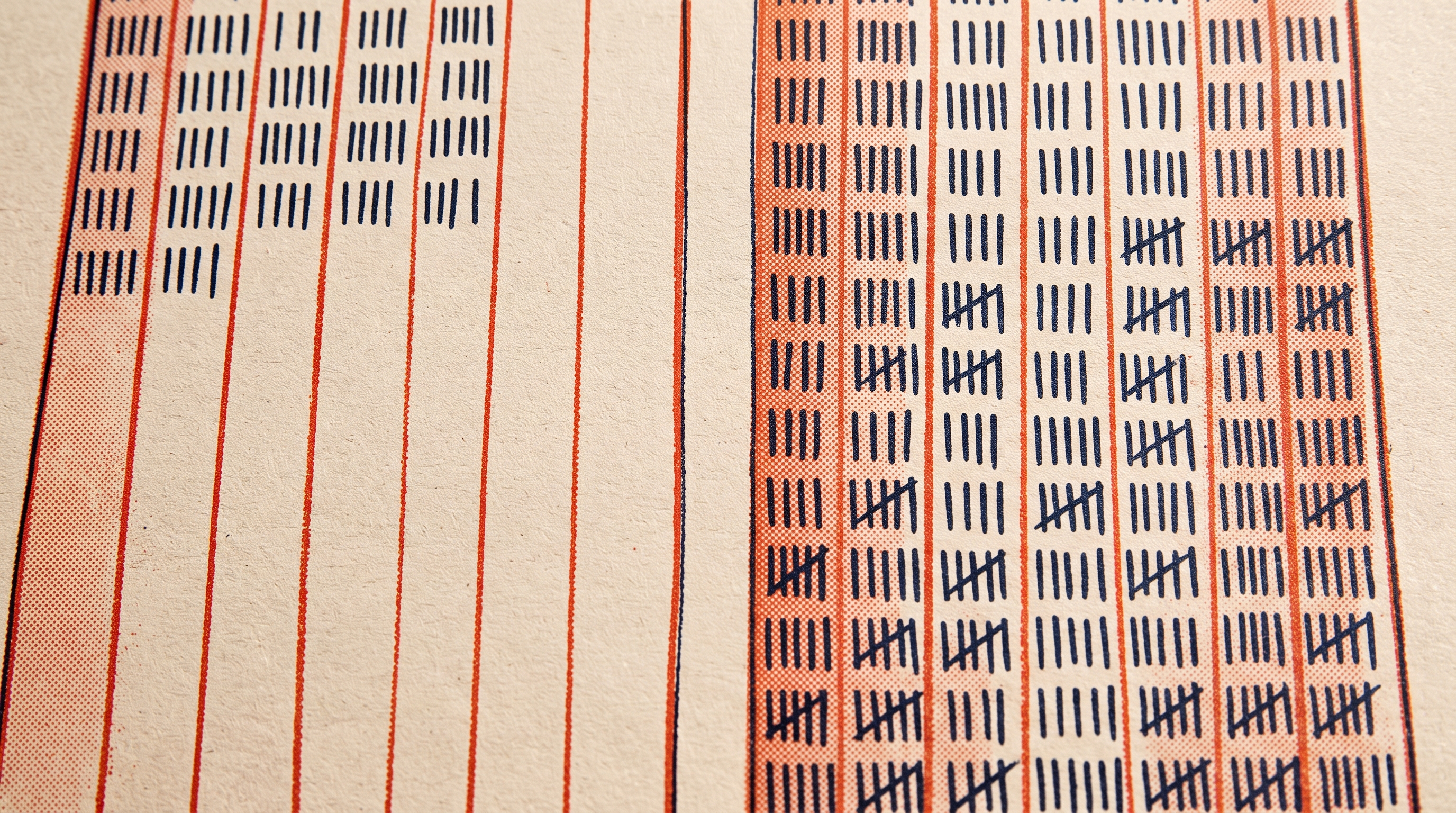
Tally in two columns. Column one, words you do not know. Column two, words you would know instantly if you heard them, where the kanji stopped you.
Add them and read the dial. Zero to 2 per hundred: unassisted reading goes comfortably and you will finish this. Three to 5: the contested zone, where plenty manage and plenty do not, depending on what you already know about the subject. Expect work. Six and above: the honest name for it is study, not reading, so pick your tools accordingly. 🎯
Two things the count misses. Unknowns that repeat get easier, and where they fall matters as much as how many. 🎴
What the second column knows
Every study behind the coverage question was run in English, where there is nothing to split. In Japanese a known word comes apart. You can hold the meaning, know the sound, and still not recognise it on the page in kanji. 👀
Nobody seems to have measured that gap. The research has the pieces and nobody has assembled this one, so the figure a vocabulary test gives you is the optimistic one. That reading is ours, not the field's.
Which is why you measure it on yourself. Column one bigger, you need more words. Column two bigger, you already know more Japanese than your reading shows, and the thing in your way is the script. 💪
危 険 | ⚠️ Abunai 危ない This measures one thing: whether you can read something unassisted, without stopping. Not whether the book is good for you. Sitting with something too hard, slowly, with a dictionary, because you want to, is a different activity and it works. Know which one you signed up for. 🙌 |
And no figure is your level. What a text demands runs from around six thousand word families for ordinary conversation to about nine thousand for a novel, and higher again in some academic writing. The number is yours and this book's, never yours alone.
This Issue's Japanese
Word
目安Everyday and practical, not bookish at all
Means: a rough guide, something you steer by rather than something you pass. 📌
Use it: 所要時間の目安· この数字を目安にしてください。· 目安にはなるけど、正確じゃないよ。
Reading trap: 安 is やす here, not あん. Anyone who has met 安心and 安い has to pick the second one. And it is めやす, never めやず: nothing is being voiced, so this is not rendaku. ⚡
Kanji 漢字
Meaning: a standard, a level, the line you line things up against.
Grade: elementary, fifth year.
Readings: ジュン, and officially that is the only one.
Common words: 基準a criterion · 標準a standard · 水準a level · 準備preparation
The good bit: 準備 is じゅんび, and the び is not rendaku. ビ is simply the on-reading of 備. 備品proves it: there the び sits at the front of a word, where rendaku cannot happen. 👀
This issue's connection: 準 gives you the vocabulary of standards. 目安 is the word for what you actually get. The counting hands you a 目安, not a 基準. 💡
Renshuu Time 練習📝
「二列で数える」. Count in two columns. About fifteen minutes.
→ Pick three things you have actually been thinking about reading. One easy, one you are unsure about, one you suspect is too hard.
→ For each, open to the middle, take three short stretches, 100 running words in total.
→ Tally as you go. Words you do not know. Words you know and could not read.
→ Write both numbers down. Six numbers, and that is the exercise.
→ Then pick your next read on purpose. Not the cheapest one. The one whose price you know and are willing to pay. 🎯
You will know you did it when: you can say out loud which of your columns is bigger, and name what that changes.
✨ Yatta やった
Only one book before the evening went? That is still two numbers you did not have this morning. 💪
The tiny win
The material was always a variable and almost nobody measures it. A minute of counting turns "this feels hard" into a price, and a price is not a verdict. It is something you decide about. 🍵
One reply back
Hit reply with your two numbers from one book. Column one, column two. We want to know how often the second is bigger, because nobody has counted it. 👀
Stay connected 🙌
We are around during the week if you want to talk shop, share a win, or just lurk. Both are completely fine.
Follow us: X / Twitter · Reddit
これからも一緒に頑張りましょうね〜 🍵
Kotoba Brew Editorial Desk