
第033号 · Issue 033
Sumo Names the Ending, Not the Move
{{first_name | みんな}}さん、こんにちは ☕
Four seconds. That is how long a sumo bout usually lasts.
Then the announcer says one word, and that word is almost always two verbs welded together. 寄り切り. 押し倒し. 突き出し.
If you have ever looked up a compound verb, understood it perfectly, and then been completely stuck on the next one, today is the day that stops. The fix is not more vocabulary. 👀
Know someone who studies one compound verb at a time and never sees the pattern? Send them this →
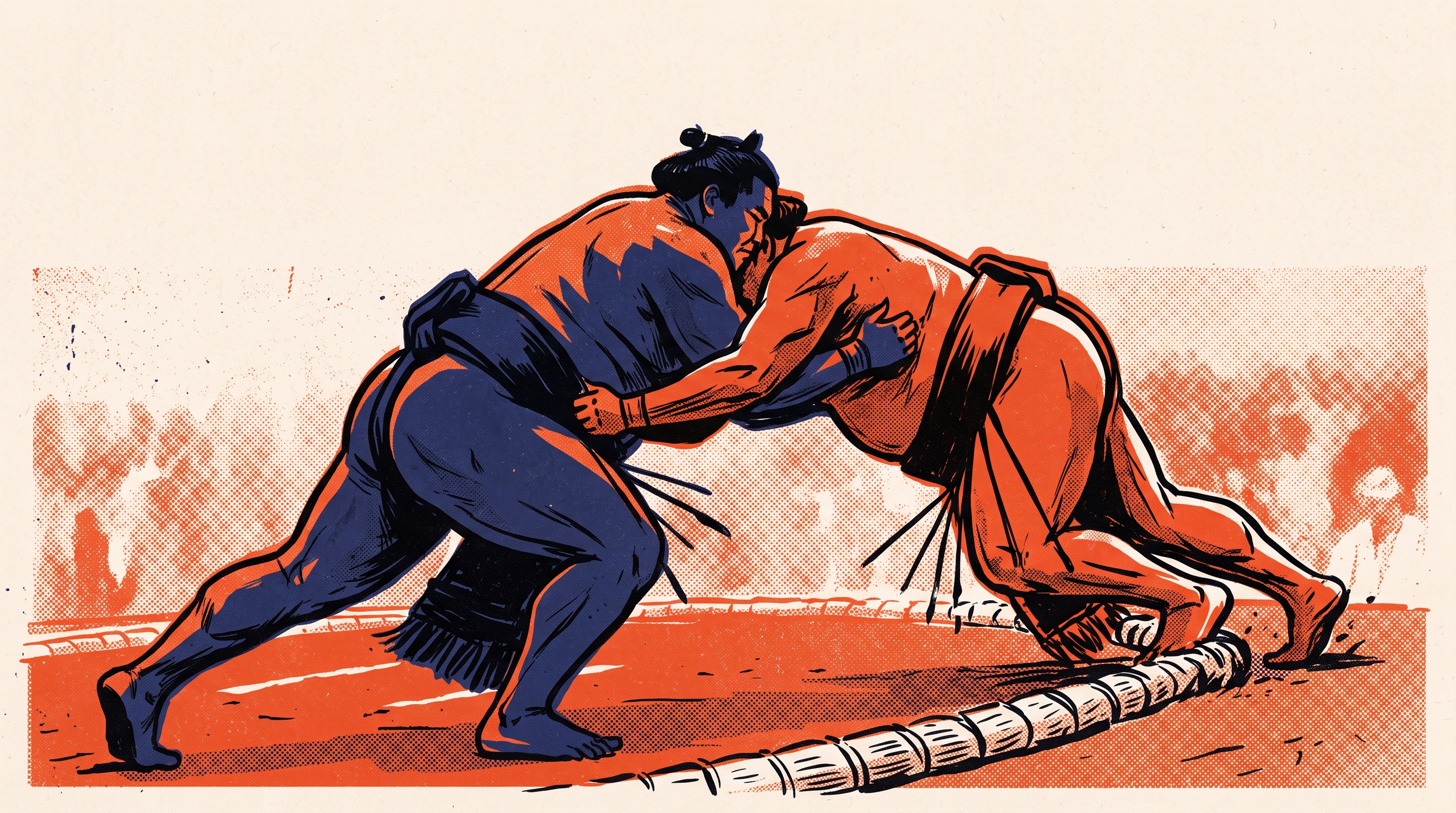
Same push. Different ending. That is the entire trick.
押し出し and 押し倒し both open with 押す, to push. Same move, same hands, same shove.
The Japan Sumo Association defines 押し倒し as a win that counts 「土俵の内外に関係なく」, regardless of whether it finished inside or outside the ring. Then their own page adds the line that does our teaching for us:
「相手が倒れないで土俵の外に出た場合の決まり手は『押し出し』になります!」
If the opponent does not fall and goes out instead, the name changes to 押し出し.
Nothing about the push changed. The second verb decided everything. 倒す, they went down. 出す, they went out. 💡
Verb one is how. Verb two is what became of it.
That is the slot, and once you see it you will not stop seeing it.
→ 食べ切る, eat it and finish it
→ 使い切る, use it until none is left
→ 思い出す, think and have it come out
→ 書き上げる, write and bring it up to done
Every one of those is a verb you already know, plus an ending that tells you where it landed. You have been reading the first half and guessing at the rest. 😅
Try it right now on one you have probably never studied: 詰め込む. 詰める is to pack. 込む is inward. Packed inward, crammed in. You did not need the dictionary for that, and that is the point. 🎯
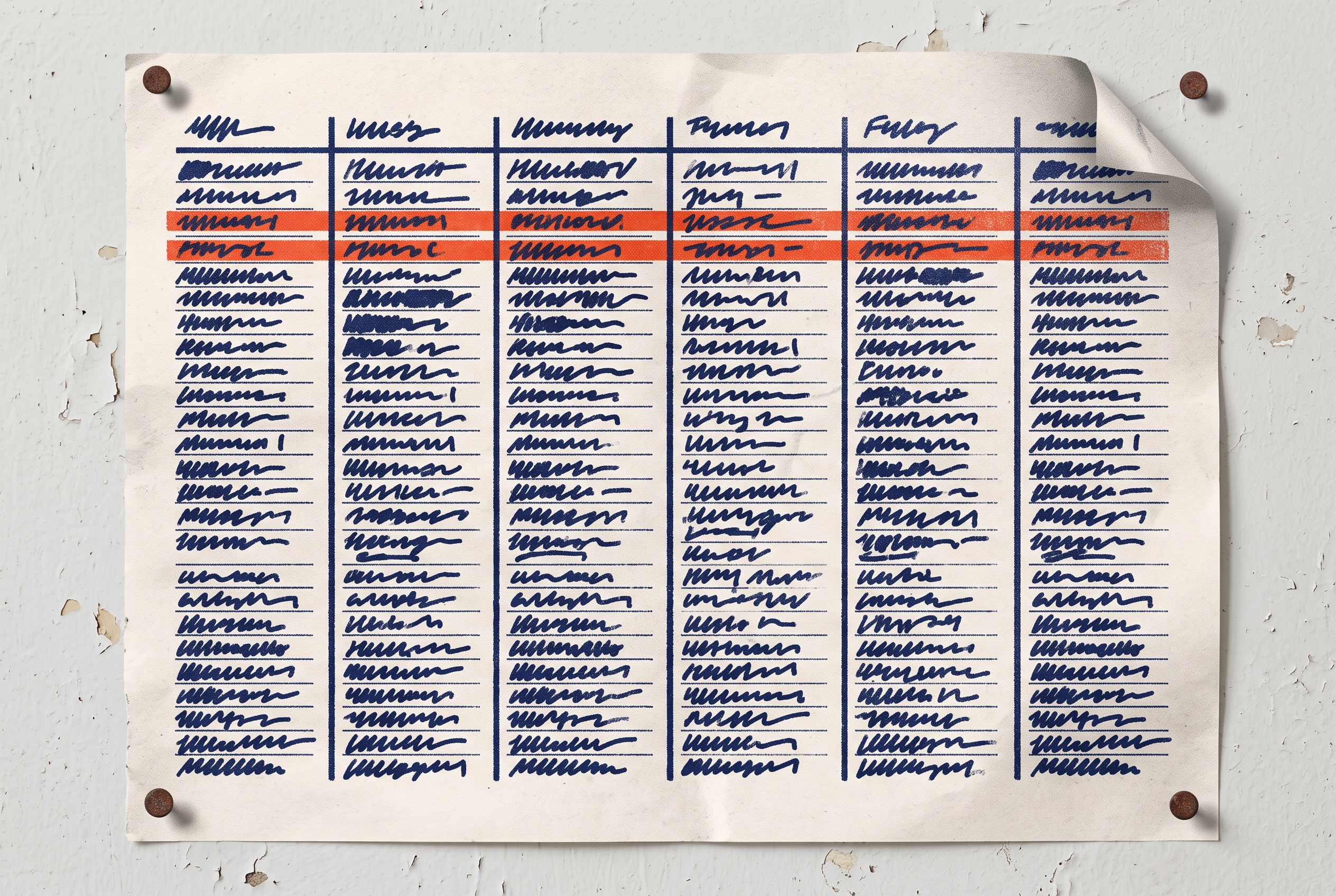
Here is why sumo makes such a good teacher. The Association publishes the full list, the 決まり手八十二手, with frequency data across 190,450 recorded bouts. 押し出し accounts for 25.17% of them. 寄り切り accounts for 24.93%.
Two names out of eighty-two cover half of all sumo. 📚 Which means half the time, the announcer is telling you one of two endings: it went out, or it went out with the pressure carried all the way through. 💪
|
一
言 |
☝️ Chotto ちょっと That 切り in 寄り切り is not cutting anything. Sitting at the end of a compound, 切る stops meaning cut and starts meaning carried all the way through, with nothing left over. 寄り切り is pressing forward and finishing the job. Same job it is doing in 使い切る and 食べ切る. 🍵 |
|
危
険 |
⚠️ Abunai 危ない Do not stretch this into a law. Read the second verb as "where did it land", not strictly as "what was the result", because that landing can be a direction rather than an outcome: 飛び込む is jump plus inward, 取り出す is take plus outward. Some second verbs do something else again. 泣き叫ぶ is two shouts of the same feeling, and 〜続ける is pure grammar, just marking that the action keeps going. This is a strong prototype, not a rule with no exceptions. |
So what do you do with it? Use it, today. Next time you hit a compound verb you have never studied, read the second half first. You will be right often enough to keep reading instead of stopping, which is the only thing that actually matters. ✨
This Week's Japanese
Word of the Week
締め切り Neutral · everyday
Means: deadline. Look at what it is built from: 締める, to close, plus 切る. A deadline is the moment the thing is closed off and no more is coming in. 📌
Use it: ordinary, unremarkable Japanese, and you will meet it in email constantly. 締め切りは金曜です. ⚡
Kanji of the Week · 漢字
Meaning: cut. But the job it does at the end of a compound verb is finish it completely.
Reading to learn first: き(る). In 締め切り it is き, in 大切 it is セツ.
Common words: 大切 important · 親切 kind · 締め切り deadline
Memory hint: a cut is the moment a thing is definitively over. That is the work 切る does at the end of a compound: not cutting, ending. 👀
This week's connection: 寄り切り and 使い切る both use 切る for carried it all the way through. 締め切り is its close cousin, the older and more concrete sense of closed off, shut. Not quite the same job, which is worth noticing: one verb, a small family of endings.
Renshuu Time 練習 📝
Ten minutes, and you will own the second-verb slot rather than just having read about it.
→ Starter: Open the NINJAL 複合動詞レキシコン. It is free, and unlike a dictionary it lets you search by the second verb. Search 切る and read the list.
→ Standard: Pick three different 〜切る compounds from that list and write one sentence each about your actual week. Not example sentences. Your week.
→ Challenge: Do it again with 出す as the second verb, then say out loud what 出す is doing to each one.
You will know you did it when: you can say what the second verb contributes, without translating the whole compound into English first.
Yatta やった ✨
You just learned a reading strategy, not four vocabulary words. The next compound verb you meet, you will not be starting from zero. That is the difference between collecting words and actually reading. 🙌
The tiny win
You gave this ten minutes and walked away with a slot you can use on words nobody has taught you yet. That is the whole point of a pattern. It keeps paying after the issue ends. 💪
One reply back
Hit reply with one compound verb you decoded this week, and what the second half was doing. One word is plenty.
We read every single one. 👀
Stay connected 🙌
We are around during the week if you want to talk shop, share a win, or just lurk. Both are completely fine.
Follow us: X / Twitter · Reddit
これからも一緒に頑張りましょうね〜 🍵
Kotoba Brew Editorial Desk