第050号 · Issue 050
Intent Is a Default, Not a Promise
{{first_name | みんな}}さん、こんにちは ☕
In issue #013 we printed this: 〜てある implies someone did it deliberately. That's it. 👀
The first part is a good default. The last two words are wrong, and we would like them back.
〜てある invites you to read a hand into the state. It does not guarantee one. A Japanese paper on the non-volitional 〜てある construction argues the weight falls on the result of the act, including results nobody meant to leave behind.
This is issue fifty. Of everything we have printed, that is the line we most wanted back. So here it is, repaired, with the family it belongs to.
Know someone who met these three in three different chapters? Send them this. Share this issue →
Four glosses, four different questions
Every form here is the て-form plus a verb that has quietly given up its own meaning. Japanese calls that a 補助動詞, a helper verb, and files them all under アスペクト. 📌
We are not going to tell you nobody teaches these together. They do. Japanese descriptive grammar puts してしまう, してある and しておく in one section, and one grammarian named the group 二次的アスペクト, secondary aspect, though that version leaves 〜ておく out.
Here is why you met them in pieces. みんなの日本語introduces ている in lesson 14, てしまう in 29, てある and ておく in 30. げんき spreads the same four across four more, and shuffled them again between editions. Months apart, different chapters. 🚪
The phrases are the trouble. "Do in advance" answers when. "Has been done" answers by whom. "Accidentally" answers how do you feel about it. Nothing that answers three different questions assembles into a set. ⚡
So try one question instead. What does this sentence want you to notice about the state, and is a human hand visible in it?
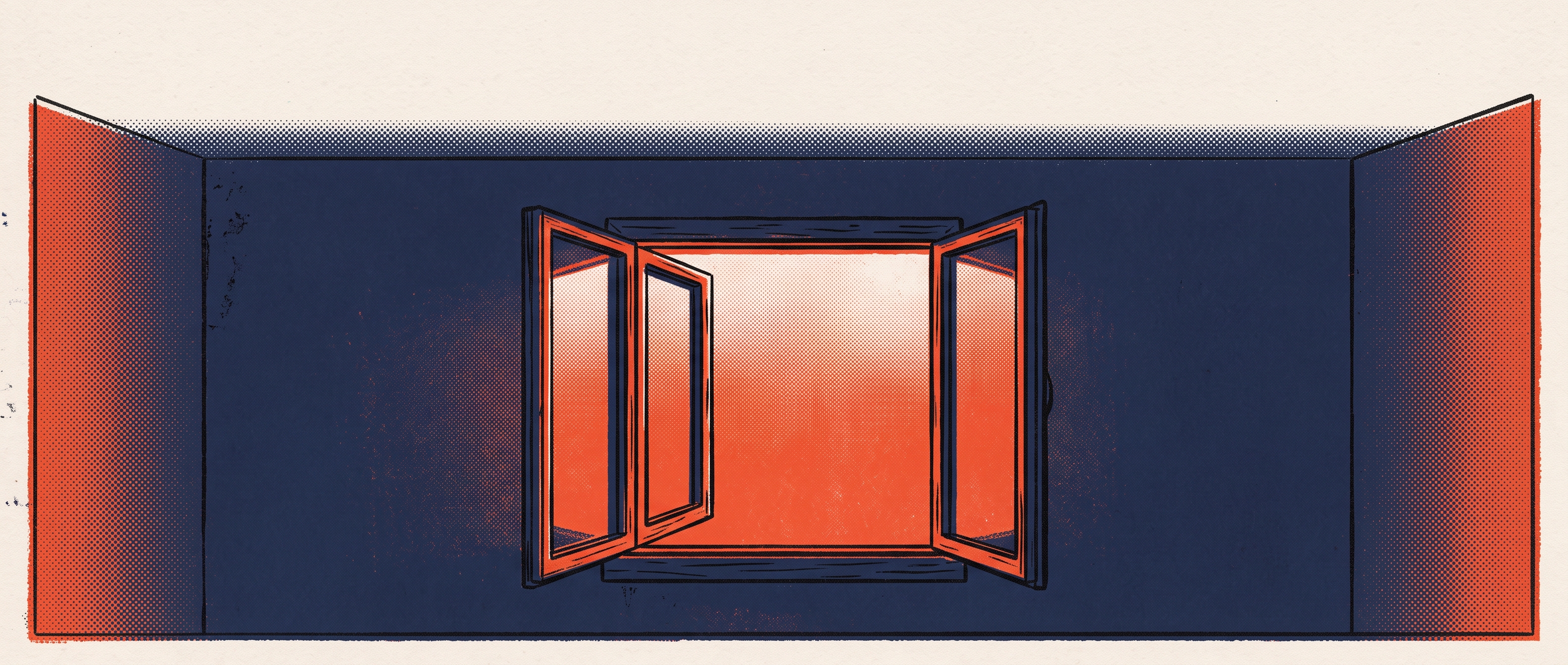
窓が開いている。 The state. Nobody in the room.
窓が開けてある。 The state, with a hand visible in it.
窓を開けておいた。 The hand, still holding it there on purpose.
窓を開けてしまった。 Not who. Whether it is still open. It is not. 🎴
The window is in the same position in all four.
一 言 | ☝️ Chotto ちょっと That axis is ours, not the field's. The grouping is Japanese and decades old, but no researcher we could find lines all four up on who is responsible for the state. The nearest covers two. Treat it as a handle, not a law. 🤝 |
One thing the gloss deletes: 〜ておく is not only doing something early. この書類はそのままにしておいてください。 Leave these documents as they are. ほうっておいて。 Leave me alone. Same grammar. Japanese names it 放任. Textbooks usually cut 〜ておく two ways, preparation and leaving alone, but the count runs from two to seven depending on whose classification you open. 👀
Where our own frame goes thin
Two places, both better than the tidy version.
〜てある does not promise you a person. The teaching rule is that it takes a transitive verb, and a Japanese university grammar module marks ×窓が開いてあります as wrong. Learn it. It holds for nearly everything you write. But 「下見に行ってある」 is attested with intransitive 行く. Strong default, not a guarantee. That is the #013 repair. ⚡
〜てしまう fits us worst. Our question asks who is in the frame. てしまう declines to answer. It answers whether the thing is closed.
Do not sort it by "completion versus regret" either. That pair snaps on contact. Japanese grammar cuts it better: 意志的な実現and 無意志的な実現, realisation you intended and realisation you did not. 💡
宿題はもうやってしまった。 Finished the homework. Meant it.
電車に傘を忘れてしまった。 Left my umbrella on the train. Did not.
つい食べてしまった。 I just ate it.
A volitional verb carrying a regret reading. That one sentence takes the English pair apart. 😅
危 険 | ⚠️ Abunai 危ない One more pair people flatten. ビールが冷やしてある points at the state: there is cold beer, go and get it. ビールを冷やしておいた points at the act and its purpose: I did it for you. Same fridge, different sentence. 🎯 |
This Issue's Japanese
Word
放置Formal, written, faintly clinical
Means: leaving a thing as it is, doing nothing about it. 📌
Use it: 問題を放置する · 放置自転車an abandoned bicycle · 放置された自転車
Reading and register: ほうち, two 音readings flat beside each other, nothing tightening, nothing voicing. 放置 is the hard, formal cousin of ほうっておく. Same idea, different register. ⚡
Kanji 漢字
Meaning: to put, to set down, to leave in place.
Grade: elementary, fourth year.
Readings: チ · お(く)
Common words: 位置position · 処置treatment · 装置a device · 置物an ornament
The honest bit: two readings and that is all of them. チ inside a compound, お(く)the moment it stands alone as a verb. We would normally show you a character's phonetic family. 置 has none worth teaching, so we are not inventing one. 👀
This issue's connection: 置 is the verb hiding inside 〜ておく. Not "in advance." Just: put it there. And 放置 is the half the English translation throws away, where you put nothing anywhere and simply leave it. 🍵
Renshuu Time 練習📝
「開いている、開けてある」. Six things, two lines each, in whatever room you are in. About fifteen minutes.
→ Find six things whose current condition a person caused. A window, a light, a curtain, a mug somebody put down.
→ Write each one twice. Once with 〜ている, the bare state: 開いている, ついている, 閉まっている. Once with 〜てある, the state with a hand in it: 開けてある, つけてある, 閉めてある.
→ Watch the verb change between the two lines. That is the transitive pair at work, and issues #009 and #018 are the back reading.
→ For two of them, add a third line with 〜ておく saying why you are holding it there: 換気のために開けておいた。
→ Last, find one thing you cannot write with 〜てある and say why not. Something that broke, fell, or nobody touched. 🎯
You will know you did it when: at least one pair uses two different verbs across its two lines, 開いている and 開けてある being the model, and your last sentence names a real reason: no transitive partner, or no person did this. If all six used the same verb twice, you put 〜てある on an intransitive verb. Go back to those pairs. 💪
✨ Yatta やった
If you got three pairs down and the evening went elsewhere, three pairs is the exercise. The last step was a bonus. 💡
The tiny win
Not three phrases with three translations. Four things a sentence can do with the state an event leaves behind: show you the state, show you the hand, keep the hand there, or shut the door.
And 〜てある invites a person into the room. It does not swear there was one. 🙌
One reply back
Hit reply with one line from your room audit, the 〜てある one. We are collecting the pairs where the verb had to change, and the repeats go into a future issue. 👀
Stay connected 🙌
We are around during the week if you want to talk shop, share a win, or just lurk. Both are completely fine.
Follow us: X / Twitter · Reddit
これからも一緒に頑張りましょうね〜 🍵
Kotoba Brew Editorial Desk