第047号 · Issue 047
A Shadow Has No Inside
{{first_name | みんな}}さん、こんにちは ☕
音は聞き取れたのに、意味が分からなかった。 👀
Japanese uses two different verbs there, because they are two different events. You caught the sounds. You did not get the meaning.
Almost everything sold to you as listening practice is aimed at the second one.
Shadowing is aimed at the first. Which is why it can feel like it is doing nothing while it is working. 📌
Know someone who shadowed for six weeks and quietly gave up? Send them this. Share this issue →
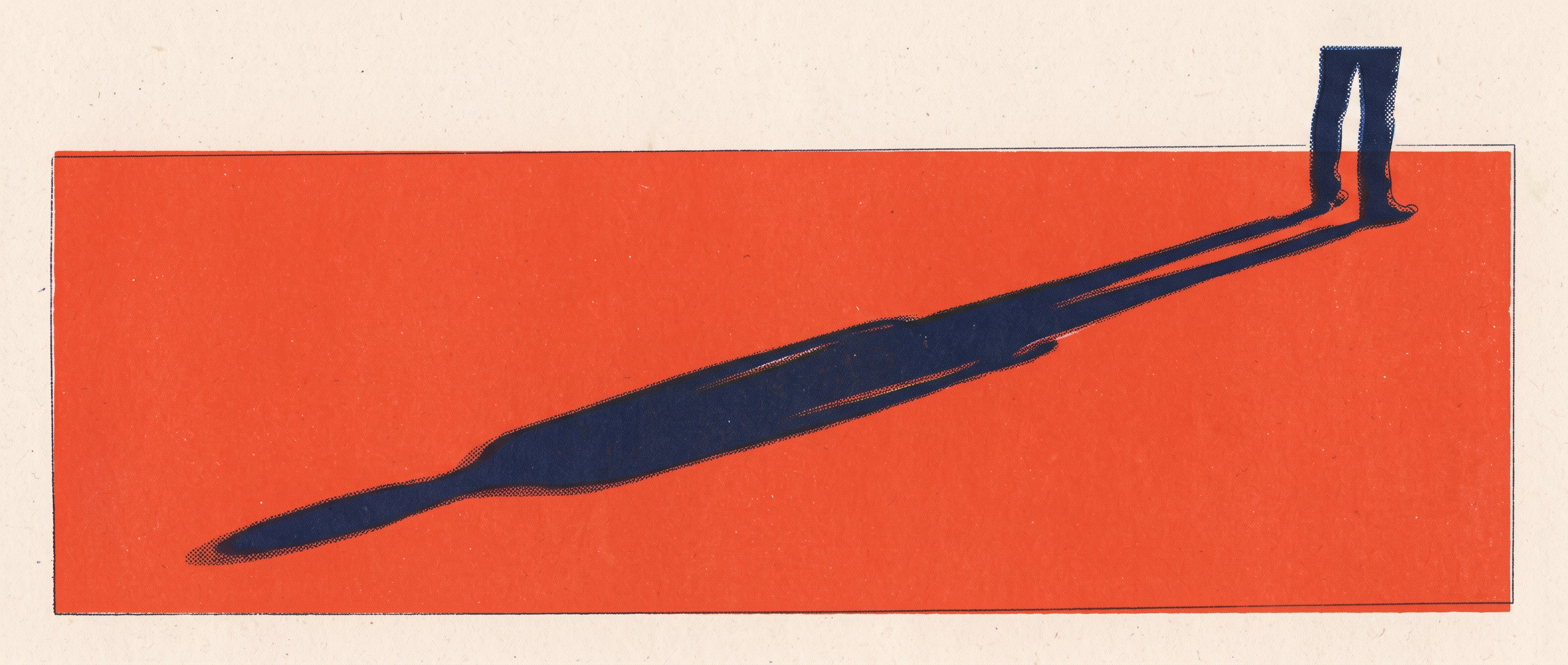
Listening is two jobs, and they fail separately
You shadowed for six weeks. Your listening did not feel different. You were watching the wrong dial. 👀
Decoding turns noise into sounds, then into word boundaries, then into words. Meaning-building turns those words into what the person meant. They fail separately. 🚪
A 2008 book on teaching listening named the problem: comprehension questions test understanding and never teach it. 💡
Shadowing works on the first job. Forty-three learners, fifteen to twenty minutes twice a week for a month, nine sessions. Their ability to hear the individual sounds improved significantly, in both the lower and the intermediate group. ⚡
The leading English-language book on shadowing for listening is subtitled Developing Learners' Bottom-up Skills. The limit was printed on the cover and got lost on the way to us. 📌
Shadowing's direct target is making speech perception automatic. Comprehension improves downstream, once hearing costs less and there is room for meaning. So it is not a comprehension exercise. Which is a different sentence from "it does not help comprehension." Only the first is in the research. 🎯
一 言 | ☝️ Chotto ちょっと Now the uncomfortable part, which is about us. In that same study only the lower group improved on the easier listening test, and neither group improved on the harder one. N3 to N2 is exactly the band where the comprehension payoff is least demonstrated. 😅 |
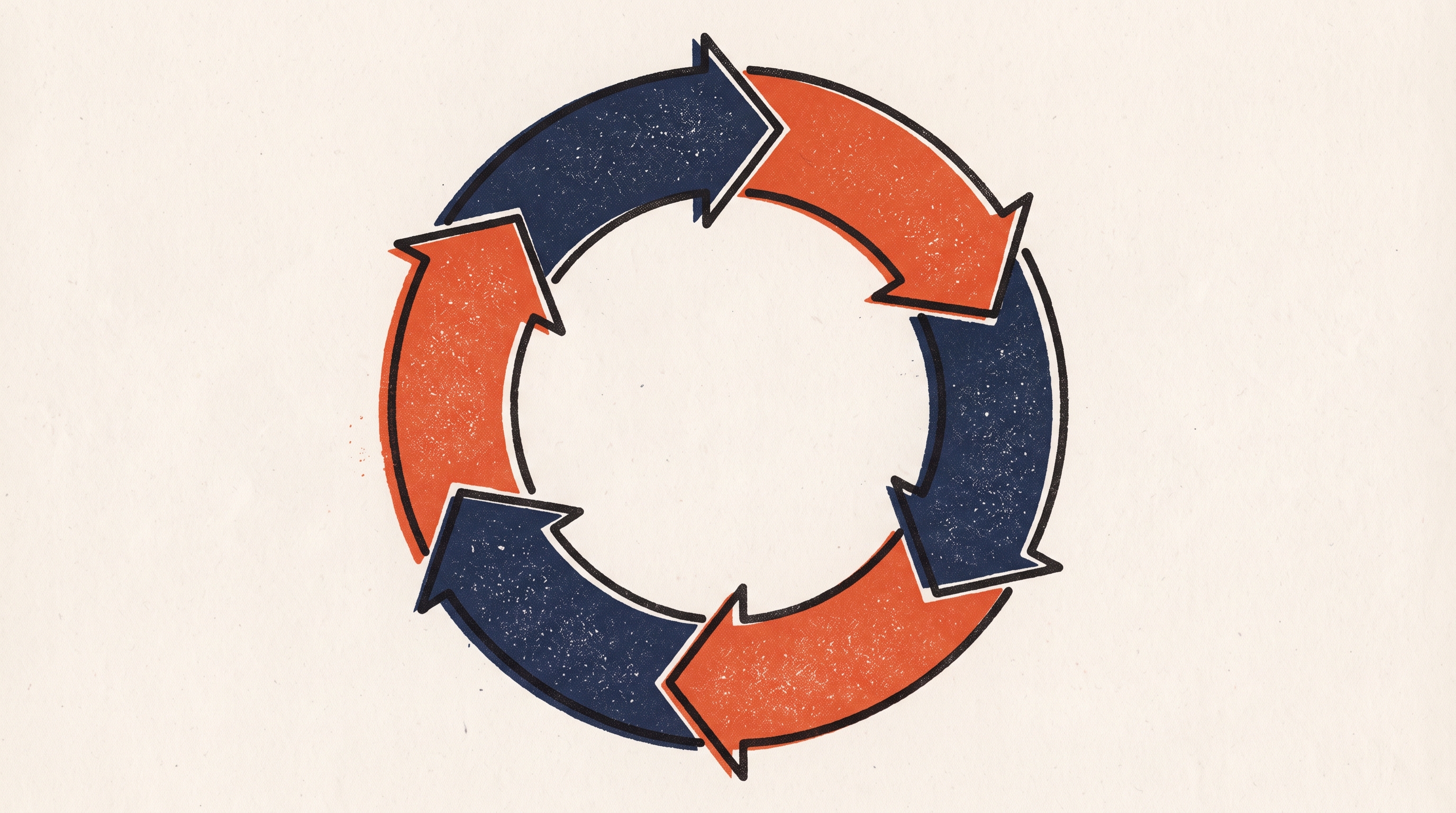
The method has six steps, and you are doing one
As published in 2004, shadowing is not one instruction. It is a cycle, and the stages take turns. 🎴
Listen. Mumble along. Read it through with the script, for content. Shadow it for the prosody. Back to the script for the hard bits. Then shadow it once more, following what is being said.
Sound, meaning, sound, meaning. The alternation is not decoration. It is the mechanism, the part that hooks the sounds you just drilled onto the meanings they carry.
Most of us learned step four. One clip, earbuds in, forever.
And notice what the mistake is not. It is not that your material was too hard. A 2011 paper on shadowing with deliberately difficult material, seventy-three high-school students, reported listening comprehension gains. Doing one sixth of a method is what wasted the six weeks. 💪
危 険 | ⚠️ Abunai 危ない Every practical number you have read about shadowing is folklore. Nobody has compared clip lengths, repetition counts, or script-visible against script-hidden. Thirty seconds and five reps is a habit, not a finding. 😅 |
So here is a default, and it is ours: short enough to get through the whole cycle in one sitting, and something you can already mostly hear. A 目安, like the number in #044. Not a 基準. ⚡
A 2025 review of forty-four studies found gains in fluency and prosody but called the evidence on individual sounds inconclusive: rhythm yes, 促音no. And nearly all of this research is Japanese speakers learning English. The studies aimed the other way had four learners in one, three in the other. 🍵
This Issue's Japanese
Word
棒読みEveryday, mildly unkind
Means: reading something out flat. No rise, no fall, nothing carried. Said of wooden voice acting and nervous speeches. 📌
Use it: せりふが棒読みで、気持ちが伝わらない。· 彼は原稿を棒読みした。
Reading trap: ぼうよみ, never ぼうどく. 読 keeps its 訓読み while 棒 takes its 音. Nothing is voiced, so this is not rendaku. It is the other trap, where you reach for ドク because you know 読書. 👀
Kanji 漢字
Meaning: the shape a thing casts when light hits it. An outline, an image.
Grade: not on the elementary list. 常用漢字, met in junior high.
Readings: エイ · かげ
Common words: 影響influence · 撮影filming · 人影a figure · 面影traces of how it used to look
The good bit: 影 and 陰 are both かげ, one reading across two characters, which is 同訓異字. 影 is the shape the light throws: 建物の影. 陰 is the side it never reaches: 木の陰. 🎯
This issue's connection: シャドーイング is 影. You trace the shape of someone's speech. The shape is real and tracing it is real training. It is just not the inside. 影が重なるようになると、聞き取れる。中身は、自分で取りに行く。
Renshuu Time 練習📝
「二往復」. Two round trips, because the alternation is the point. About fifteen minutes. You need twenty to thirty seconds of audio you can mostly follow, plus a transcript.
→ Listen twice, no script. Then say out loud, in one sentence, what it was about.
→ Shadow it three times, no script, quietly. Accuracy is not the point. Each time you fall off, note roughly where.
→ Open the transcript and go straight to your fall-off points. Only those.
→ Shadow three more times with the transcript up, chasing the rhythm, not the meaning.
→ Close the transcript. Shadow once more, this time following what is being said. ⚡
The sequence is theirs. The counts and timings are ours, untested by anybody.
You will know you did it when: you can name one place where what you expected and what was there came apart. Not "the middle was fast." More like "I heard that as one word, and it was two."
✨ Yatta やった
If you only got through the three no-script passes, you still did the measurement. Most of those spots are words you know that did not sound the way your head stores them. 💡
The tiny win
You are not chasing the meaning. You are chasing the shape. Then you go back and get the meaning on purpose, and chase the shape again knowing what it holds.
One reply back
Hit reply with one place you fell off and what was actually there. Nobody has turned this into a proper test, as far as we can find, but we are collecting them. 🍵
Stay connected 🙌
We are around during the week if you want to talk shop, share a win, or just lurk. Both are completely fine.
Follow us: X / Twitter · Reddit
これからも一緒に頑張りましょうね〜 🍵
Kotoba Brew Editorial Desk